Are Solar Panels Recyclable in Australia?
Most of a solar panel is recyclable — the glass and aluminium frame that make up the bulk of its weight are both materials Australia already recycles at scale, and a growing number of specialist e-waste recyclers now handle the harder-to-separate parts (the silicon cells, wiring, and junction box) as well. What's still missing is a single, mandatory national collection scheme, so what happens to a panel at end of life depends on where you live and who removes it.
Quick answer: a panel replaced after 20–30 years of service, or one that fails early under warranty, should go to a solar or e-waste recycler rather than general rubbish — in Victoria this is a legal requirement, not just good practice. See our solar panel maintenance guide for how to get the most life out of a system before replacement is even on the table.
Are solar panels recyclable?
Yes — the majority of a standard rooftop solar panel by weight is recyclable with technology already operating in Australia. A panel is mostly glass and aluminium, both long-established recycling streams, plus smaller amounts of silicon, copper wiring, and a polymer backsheet that are harder to separate but increasingly handled by dedicated solar and e-waste recyclers rather than a standard kerbside process.
- Glass — the front cover of a panel, typically the single heaviest component, recyclable through the same glass streams used for other products.
- Aluminium frame — high-value scrap metal with an established, well-paying recycling market.
- Silicon cells, copper wiring, and backsheet — recoverable, but require specialist processing to separate cleanly from the laminated panel structure, which is why they go to a solar/e-waste recycler rather than a general scrap yard.
What a panel is not is general household rubbish — see landfill rules by state below for where that matters legally, not just in principle.
What happens to a panel at end of life
A panel reaches end of life in one of three ways: it fails early and is replaced under warranty, it's swapped out as part of a system upgrade well before it's actually failed, or it simply reaches the end of its 25–30 year working life, as covered in our maintenance guide. In all three cases, removal is electrical work best left to a licensed installer rather than a DIY job.
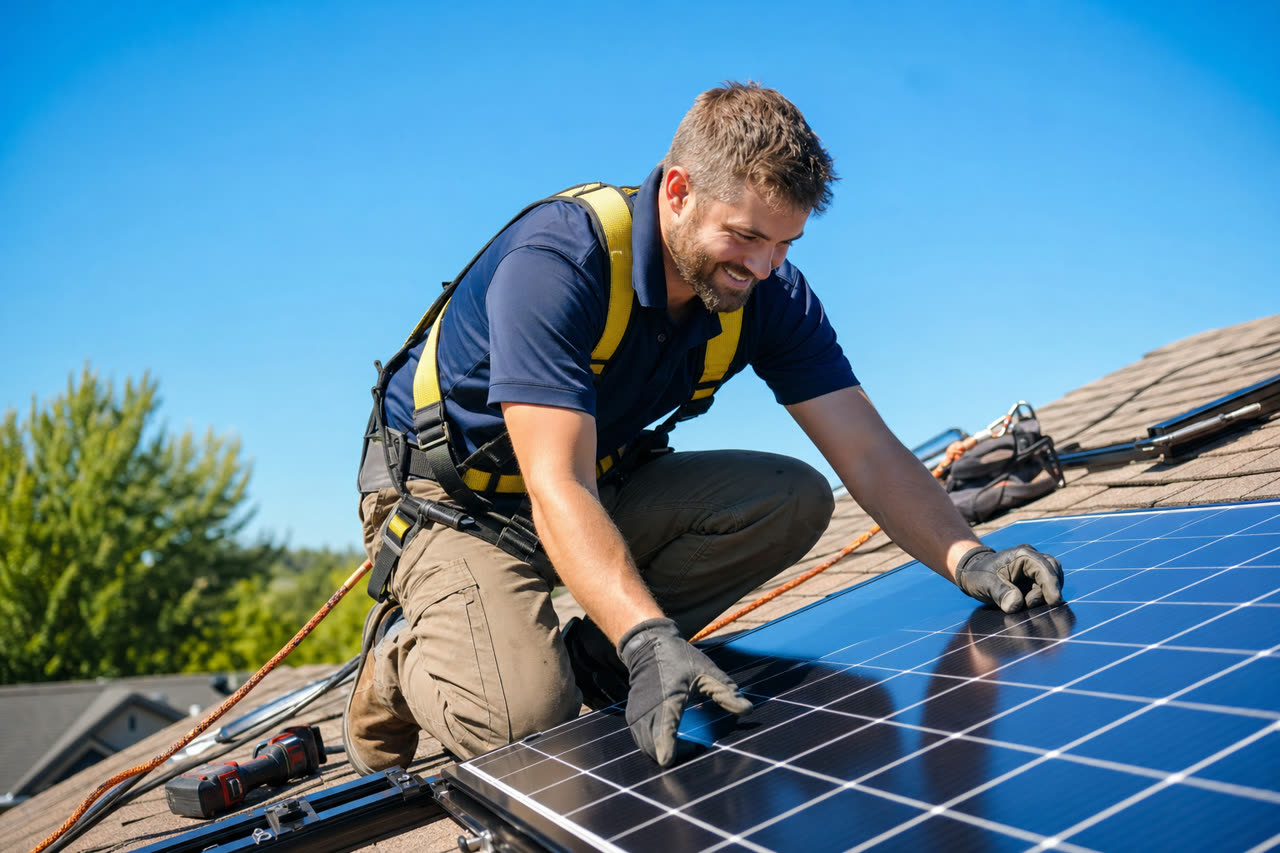
- Ask your installer first — many installers already have an arrangement with a solar or e-waste recycler and will fold removal and recycling into an upgrade or replacement job.
- Council and community drop-off points — a growing number of local councils accept small numbers of household panels at e-waste collection points; check your council's website, since this varies by area.
- Dedicated solar recyclers — specialist services exist specifically for panels and are the right option for a full system's worth of old panels, or when your installer doesn't offer take-back.
What's inside a panel and how recycling works
A typical crystalline-silicon panel — the kind on most Australian roofs — is a sandwich: a glass front sheet, encapsulated silicon solar cells wired together, a polymer backsheet, and an aluminium frame holding it all together. Recycling separates these layers so each material can go to its own recovery stream.
| Component | Share of panel | Recycling route |
|---|---|---|
| Glass | Majority of total weight | Established glass recycling |
| Aluminium frame | Significant minority of weight | High-value scrap metal recycling |
| Silicon cells, copper, silver | Small fraction of weight, disproportionate value | Specialist solar/e-waste processing |
| Polymer backsheet, junction box, encapsulant | Small remaining fraction | Specialist processing; some components are harder to recover than others |
Shares are approximate and vary by panel model and manufacturer — ask a recycler for the specifics of the process they use if you need exact figures.
Basic processing (removing the frame and glass) is widely available in Australia today. Full recovery of the silicon cells and trace metals needs more specialised equipment — Solar Victoria notes that specialist recyclers can now recover up to 90% of a panel's materials for reuse, and the Clean Energy Council tracks industry developments in this space if you want the current state of play.
Landfill rules by state
Rules on disposing of old solar panels aren't uniform across Australia. Victoria bans e-waste, including solar panels, from landfill under a statewide ban reported to have been in place since July 2019 — Solar Victoria's guidance confirms decommissioned panels from that state's Solar Homes Program must go to a lawful e-waste collection point or an EPA-authorised solar PV recycler, not general waste. Other states and territories don't currently have an equivalent solar-specific landfill ban, though general e-waste diversion is widely encouraged and many councils run their own collection programs regardless of whether it's a legal requirement.
There is also no single mandatory national recycling scheme covering solar panels yet, unlike the arrangements that exist for products such as televisions and computers. The federal government has been piloting a national solar panel program aimed at reducing landfill and improving mineral recovery, but as of 2026 responsible disposal in most of the country still relies on installer take-back, council programs, and specialist recyclers rather than a legislated national requirement. Check your own state or territory environment agency for the current position before assuming the rules are the same everywhere.
Cost of solar panel recycling
What recycling a panel costs depends on volume and who's doing it. A homeowner dropping off one or two panels at a council e-waste point often pays nothing; a specialist recycler processing a small residential batch typically charges a modest per-panel fee, commonly in the tens of dollars, to cover collection and processing. When an installer removes a full system as part of a replacement or upgrade, disposal and recycling is often bundled into the overall job price rather than itemised separately — worth asking about upfront alongside the figures in our installation cost guide.

For a household replacing a small residential system, the practical cost difference between recycling responsibly and simply not thinking about it is usually small — the bigger factor is finding a recycler or council program that will actually take the panels, particularly outside Victoria where there's no legal obligation forcing the issue.
Warranty claims and early failure
A panel that fails well before the end of its expected life is usually a warranty matter first and a recycling question second. If a panel is still within its manufacturer's product (parts) or performance warranty period — see our maintenance and warranty guide for how those terms typically work — the manufacturer or installer may replace it outright, and the faulty unit is generally recycled by whoever manages the warranty claim rather than something the homeowner needs to arrange themselves.
If you're replacing a system whose original installation is still within its STC (Small-scale Technology Certificate) compliance period, note that a genuine replacement installed by a CEC-accredited installer is assessed under the same STC rules as any new system — that's a separate question from what happens to the old panels, but worth raising with your installer in the same conversation.
Choosing panels that reduce future e-waste
The single biggest lever homeowners have over future e-waste isn't recycling — it's buying panels that last as long as possible in the first place, since a panel that runs its full 25–30 year life avoids an early-replacement recycling problem altogether. A few things worth checking at purchase time, alongside the price comparisons in our installation cost guide:
- Tier 1 manufacturer standing — panels from established, well-capitalised manufacturers are more likely to still be trading (and honouring warranty claims) decades from now than a lesser-known budget brand.
- Performance and product warranty length — a longer, clearly documented warranty is both consumer protection and a signal of manufacturer confidence in the panel's durability.
- Installer accreditation — installation quality from a CEC-accredited installer reduces the risk of early failure from poor mounting or wiring, which is one of the more common causes of premature panel replacement.
If you're also adding or upgrading a battery, our battery installation guide covers the same durability and installer-quality considerations for that side of the system.
Common questions
Are solar panels recyclable in Australia?
Yes. Most of a panel's weight — the glass and aluminium frame — is recyclable through established streams, and specialist e-waste recyclers increasingly recover the silicon cells and wiring too. There's no single national scheme yet, so options vary by state and recycler.
What happens to old solar panels when they're removed?
A licensed installer typically removes them as electrical work. From there they go to a solar/e-waste recycler, a council e-waste collection point, or back to the manufacturer under a warranty claim, depending on the reason for removal.
How much does it cost to recycle a solar panel?
Often free at a council e-waste point for a small number of panels; specialist recyclers processing a batch typically charge a modest per-panel fee. Removal and recycling is often bundled into the price when an installer replaces a full system.
Can I put an old solar panel in general council waste?
Not in Victoria, where solar panels are banned from landfill under the statewide e-waste ban in effect since July 2019. Other states don't currently have an equivalent legal ban, but a solar or e-waste recycler is still the responsible option everywhere.
Is there a national solar panel recycling scheme in Australia?
Not a mandatory one as of 2026. The federal government has been piloting a national program to cut landfill and improve mineral recovery, but recycling still mainly relies on installer take-back, council programs, and specialist recyclers rather than one legislated national requirement.