Solar Battery Installation: How It Works and What It Costs
Solar battery installation in Australia is a one- to two-day job for an accredited installer — a site assessment, mounting the battery and (usually) a hybrid inverter, rewiring the switchboard, and lodging a grid connection application with your local distributor. Fully installed, adding a battery to a home typically costs $8,000–$16,000 after the federal battery discount, depending on capacity and whether it's fitted alongside new solar or retrofitted to an existing system.
Solar battery installation is the process of physically fitting a home battery — plus any additional inverter or switchgear it needs — to a property and connecting it safely to both the solar system and the electricity grid, carried out by a Clean Energy Council (CEC) accredited installer under Australian wiring standards.
This guide walks through what happens on install day, what changes the price, and what to check before you sign a quote.
How solar battery installation works
A standard residential battery install follows the same broad sequence regardless of brand:
- Site assessment — the installer checks switchboard capacity, where the battery will sit (garage, external wall, or plant room), and whether your existing solar inverter can pair with the battery or needs replacing.
- Mounting — most home batteries are wall-mounted or floor-standing units fitted close to the switchboard to keep cable runs short.
- Inverter work — many installs add or swap in a hybrid inverter that manages solar, battery, and grid together; some batteries instead use a separate battery (AC-coupled) inverter alongside your existing solar inverter.
- Switchboard and wiring — new circuits, isolators, and safety switches are added to meet Australian wiring rules for battery systems.
- Grid connection and commissioning — the installer lodges a connection application with your local electricity distributor, then commissions and tests the system before handing it over.
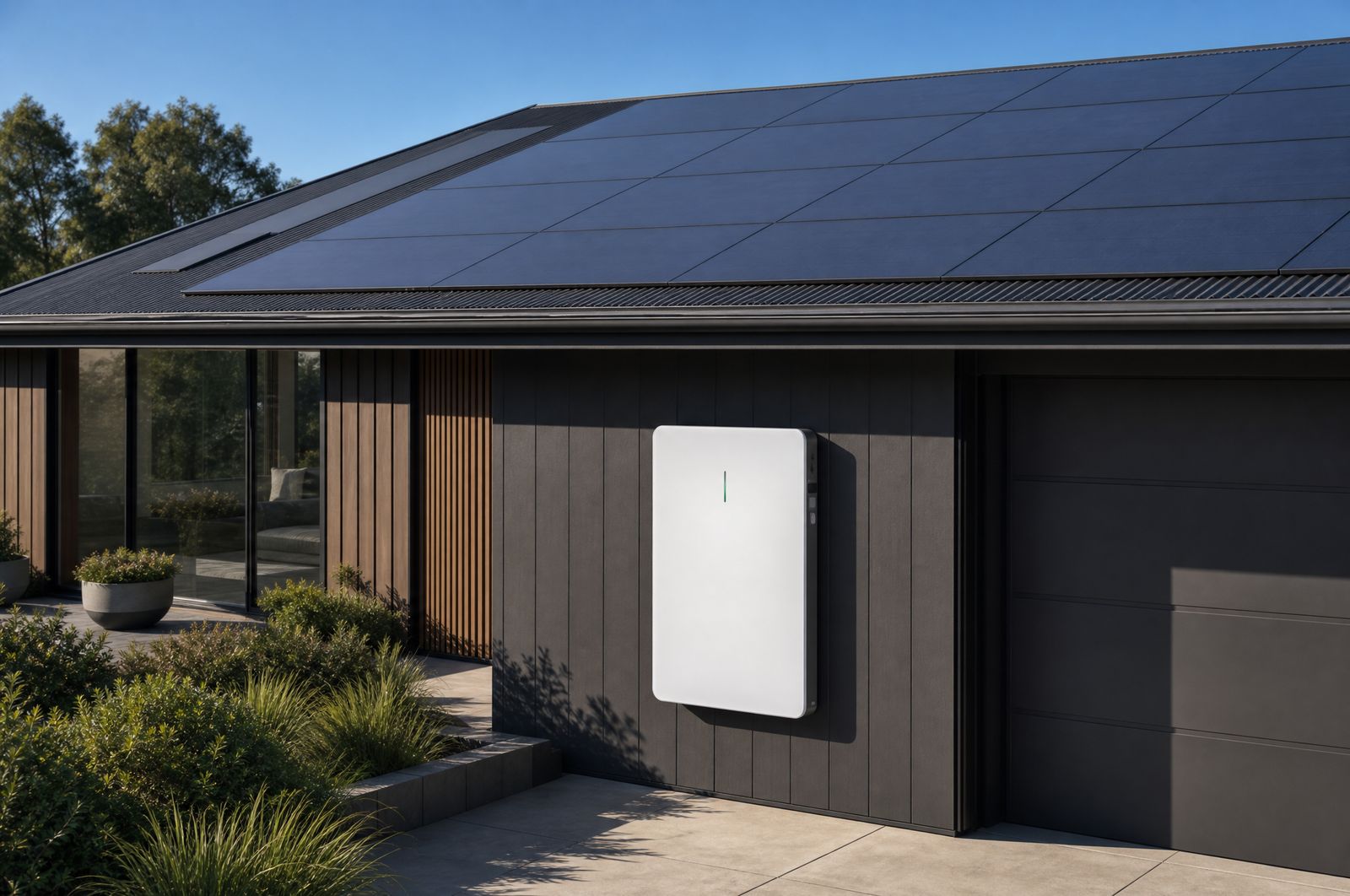
Most straightforward installs — a single battery paired with an existing solar system — take one day on site. Jobs that also involve a switchboard upgrade, a new hybrid inverter, or a first-time solar-plus-battery install can run to two days.
What it costs to install a battery
A typical Australian home battery costs $8,000–$16,000 installed in 2026, after the roughly 30% federal battery discount is applied. These are typical fully-installed Australian prices by capacity:
| Battery capacity | Typical installed price (after federal discount) | Best suited for |
|---|---|---|
| 5–7 kWh | $8,000–$11,000 | Evening top-up for a small household |
| 10–13 kWh | $11,000–$16,000 | Most Australian homes (most common range) |
| 15 kWh+ | $16,000–$22,000+ | Large households, high overnight usage |
Indicative Australian pricing, 2026, installed price after the federal battery discount. See our solar battery cost guide for equipment-only pricing by brand and size.
Since 1 July 2025, the Cheaper Home Batteries Program has funded a discount of roughly 30% off the upfront cost of eligible battery systems (5–100 kWh usable capacity), applied by the installer at point of sale rather than claimed afterwards — you don't need to apply separately. The exact discount is based on the battery's usable capacity and is scheduled to step down gradually through to 2030, so get a current quote rather than relying on a figure from a previous year. See our solar rebate guide for how this interacts with state-based schemes.
Installing with new solar vs retrofitting to an existing system
The install job — and sometimes the price — differs depending on whether the battery is going in alongside a new solar system or being added to one that's already on the roof:
- New solar + battery together — the installer designs the inverter and wiring for both from the start, which is usually the most efficient install and often the better value per kW/kWh.
- Retrofitting an existing solar system — the installer needs to check whether your current inverter can pair with the battery (AC-coupled) or whether a hybrid inverter swap is needed. Older or budget inverters more often need replacing, which adds to the retrofit cost.
- No existing solar — a battery can be installed without solar panels (charged from the grid on off-peak rates), but this is uncommon in Australia since it forgoes the free daytime charging solar provides, and gives up the bigger bill savings a paired system delivers.
If you're planning both eventually, ask your installer for a written compatibility check on your current inverter before you buy a battery in isolation — it's the single biggest factor in whether a retrofit is simple or requires extra electrical work. See our solar panel installation cost guide for what a from-scratch solar + battery install looks like.
Accreditation and compliance
Battery installation in Australia is more tightly regulated than panels-only solar, because it involves stored energy and higher-risk electrical work:
- CEC accreditation — only a Clean Energy Council accredited installer with the specific battery-storage endorsement can install and commission a home battery; it's also a requirement to receive the federal discount.
- Wiring and safety standards — installs must meet the relevant Australian wiring rules and battery installation standards, including safety clearances around the unit.
- Location rules — some battery chemistries have restrictions on installation inside habitable rooms or garages attached to living areas; your installer will confirm what applies to the specific unit and your home.
- Distributor approval — like solar, a battery system needs sign-off from your local electricity distributor before it can be connected and exporting.
How to get an accurate installation quote
Because the price depends on your existing inverter, switchboard, and chosen battery, a desktop estimate is always approximate. When comparing quotes:
- Confirm the price is after the federal battery discount, not before it — some quotes list the pre-discount price by mistake.
- Ask whether your existing solar inverter is compatible, or whether a hybrid inverter replacement is included in the price.
- Confirm the installer holds the CEC battery-storage accreditation, separate from standard solar accreditation.
- Get two to three quotes — installation labour and inverter choices vary between installers more than the battery unit price does.

A free on-site assessment gives you a fixed, itemised installation price rather than a rough estimate. See whether solar is worth it for your home, or get your exact number.
Common questions
How much does solar battery installation cost in Australia?
A fully installed home battery typically costs $8,000–$16,000 in 2026 for the most common 5–13 kWh range, after the federal Cheaper Home Batteries Program discount of roughly 30% is applied by your installer at point of sale.
How long does it take to install a solar battery?
Most single-battery installs on an existing solar system take one day on site. Jobs that also need a switchboard upgrade or a hybrid inverter swap can take two days.
Do I need an accredited installer for a battery?
Yes. You need a Clean Energy Council accredited installer with the specific battery-storage endorsement, not just standard solar accreditation. It's also a condition of receiving the federal battery discount.
Can I add a battery to my existing solar system?
Usually yes. The installer checks whether your current solar inverter can pair with the battery (AC-coupled) or whether a hybrid inverter replacement is needed — older or budget inverters more often need swapping, which adds to the retrofit cost.
Is the federal battery discount applied automatically?
Yes. Under the Cheaper Home Batteries Program, the installer or retailer applies the discount upfront on the quoted price — you don't need to apply separately or claim it afterwards.