Solar batteries in Australia — cost, rebates and whether they're worth it in 2026
A home battery in Australia typically costs $8,000–$16,000 installed, and the federal battery rebate now takes roughly 30% off that. Since the Cheaper Home Batteries Program started in mid-2025, storage has gone from a long-payback extra to something that stacks up for far more households — especially homes with solar and high evening power use.
Here's what a battery really costs in 2026, how the rebate works, and the honest answer on whether it's worth it for your home.
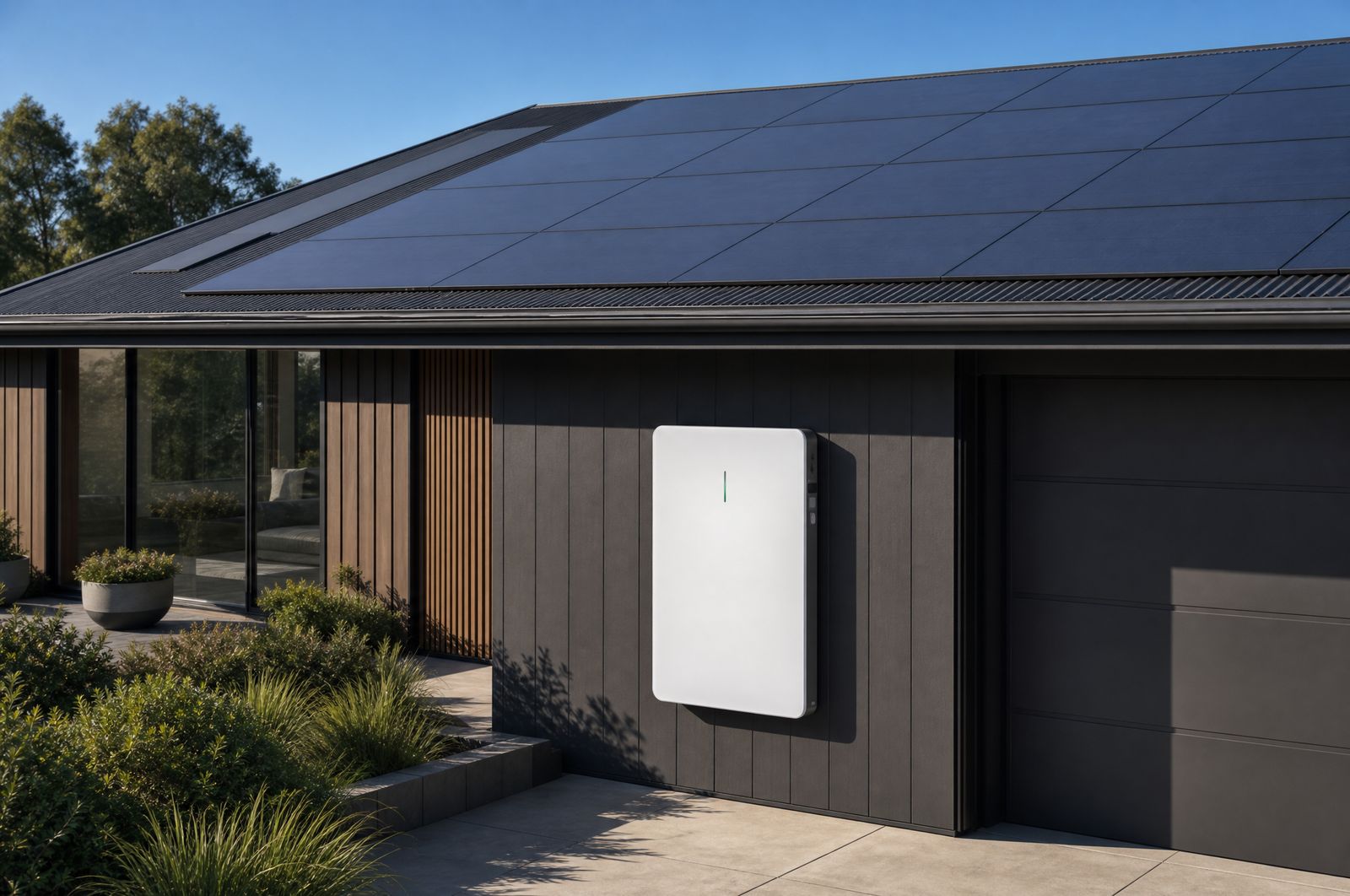
What does a solar battery cost in Australia?
Battery pricing depends on size (usable kWh), brand, and whether you need backup wiring. As a 2026 guide, here are typical installed prices — before and after the federal rebate:
| Usable capacity | Typical installed price | Approx. federal rebate | Price after rebate |
|---|---|---|---|
| 10 kWh | $9,000–$13,000 | ~$2,500 | ~$6,500–$10,500 |
| 13.5 kWh | $12,000–$16,000 | ~$3,400 | ~$8,600–$12,600 |
Indicative only — actual prices vary by brand, inverter and backup requirements. The rebate is applied upfront by your installer.
Adding a battery at the same time as a new solar system is usually cheaper than retrofitting one later, because the install and some hardware are shared. See full solar system costs in Australia.
The federal battery rebate (2026)
The federal Cheaper Home Batteries Program is the main incentive. It takes roughly 30% off the cost of an eligible battery — around $250 per usable kWh in 2026 (about $2,500 on a 10 kWh battery) — applied upfront by your installer through the small-scale certificate (STC) scheme, so you never handle the paperwork.
- You need solar. The battery must be paired with a solar PV system — new or existing. Standalone batteries aren't eligible.
- The full rate applies to the first 14 kWh of usable capacity, then tapers for larger batteries — so a typical home battery gets the full benefit.
- One rebate per property, on an approved battery, installed by an SAA-accredited installer. There's no means test.
- It steps down every six months from 1 May 2026 through to 2030 — so installing sooner locks in a bigger discount.
Full detail, including how it stacks with the STC panel rebate, is in our Australian solar rebate guide.
State battery schemes on top
Several states add their own support on top of the federal rebate:
- New South Wales — incentives for connecting your battery to a Virtual Power Plant (VPP) under the Peak Demand Reduction Scheme. NSW rebates →
- Western Australia — a state battery rebate plus the DEBS feed-in scheme. WA rebates →
- Victoria — interest-free loans and the Solar Homes program. VIC rebates →
- Queensland — battery support is now mainly the federal rebate, alongside strong feed-in options. QLD rebates →
Is a solar battery worth it in 2026?
For a lot more homes than a year ago — yes. The federal rebate has cut typical battery payback from 12–15 years to roughly 7–10 years, inside the warranty life of most batteries. A battery is most worth it if you:
- Use a lot of power in the evening, after the sun has gone down
- Want backup power through blackouts (needs backup-capable wiring)
- Can join a VPP and earn for supporting the grid at peak times
When a battery isn't worth it yet: if your power use is low, or mostly during daylight hours, you'll already be self-consuming most of your solar — so a battery adds cost without saving much. In that case, panels alone often make more sense first, with a battery added later as prices keep falling.
See whether solar itself is worth it for your home, or get a free assessment for real numbers on solar and storage.
What size battery do I need?
Size the battery to your evening and overnight usage — the power you'd otherwise buy from the grid after your panels stop generating. For most homes that's a 10–13.5 kWh battery.
Bigger isn't always better: the federal rebate gives full value to the first 14 kWh, and an oversized battery rarely fills completely, so you pay for capacity you don't use. Your installer sizes it from your actual usage pattern at the free assessment. You can also try our solar savings calculator to see the effect of adding storage.
Common questions
How much does a solar battery cost in Australia?
In 2026, a home battery typically costs $8,000–$16,000 installed depending on size, brand and backup requirements. The federal Cheaper Home Batteries Program takes roughly 30% off that — about $250 per usable kWh, or around $2,500 on a 10 kWh battery.
Is there a rebate for solar batteries in Australia?
Yes. The federal Cheaper Home Batteries Program gives around 30% off an eligible battery (about $250 per usable kWh in 2026), applied upfront by your installer. Some states add further support, such as NSW VPP incentives and WA's battery rebate.
Do I need solar panels to get the battery rebate?
Yes. The battery must be paired with a solar PV system — either new or existing. A standalone battery with no connected rooftop solar is not eligible for the federal rebate.
Is a solar battery worth it in Australia in 2026?
For many homes, yes — the federal rebate has cut typical payback to around 7–10 years. A battery is most worth it if you use a lot of power in the evening, want blackout backup, or can join a Virtual Power Plant. If your usage is low or mostly during the day, panels alone often make more sense first.
How big a solar battery do I need?
Most homes suit a 10–13.5 kWh battery, sized to your evening and overnight usage. The federal rebate gives full value to the first 14 kWh, and oversizing rarely pays off because a large battery seldom fills completely.
Will the battery rebate end?
The federal battery rebate steps down every six months from 1 May 2026 through to 2030. It is not ending immediately, but the discount shrinks over time — so installing sooner locks in a larger rebate.