How much do solar panels cost in Australia in 2026?
A 6.6 kW solar system in Australia typically costs $5,000–$8,500 in 2026, after the federal STC rebate is applied. That's the price most homes pay — Australia is one of the cheapest solar markets in the world thanks to the rebate and strong competition. Larger 10 kW systems run around $8,000–$12,000.
Prices are usually quoted after the federal rebate, since your installer applies it directly. This guide breaks down cost by system size, what's included, battery pricing, and how fast it pays back.
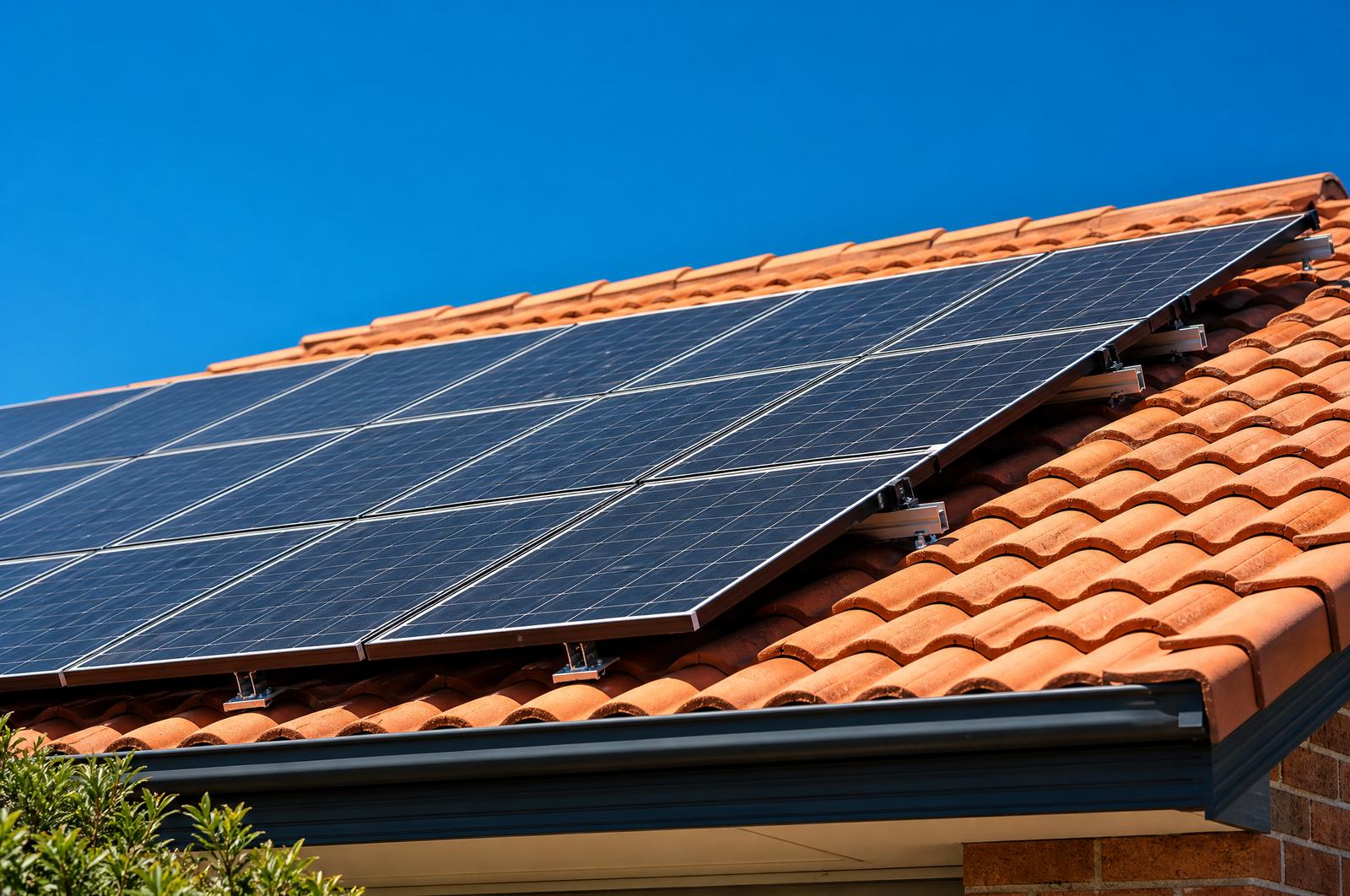
Solar panel cost by system size
These are typical fully-installed Australian prices in 2026, after the federal STC rebate:
| System size | Panels (approx) | Typical price (after rebate) | Best suited for |
|---|---|---|---|
| 3 kW | 7–8 panels | $3,500–$5,000 | Small households, apartments |
| 6.6 kW | 15–16 panels | $5,000–$8,500 | Most Australian homes (most common) |
| 10 kW | 22–25 panels | $8,000–$12,000 | Large households, high usage |
| 6.6 kW + battery | 15–16 panels | $12,000–$20,000+ | Evening coverage & backup |
Indicative Australian pricing, 2026, after the federal STC rebate. Premium panels and inverters add roughly 20–30%.
Prices work out to roughly $0.90 per watt installed for a standard system — among the lowest in the world. See how the rebate is applied.
What's included in the price
- Solar panels — tier-1 monocrystalline are standard
- Inverter — converts panel output to usable AC power
- Racking and mounting — rated for your roof type (tile, tin/Colorbond)
- accredited installation and grid connection
- The federal STC rebate, applied as an upfront discount
- Monitoring app — track generation in real time
Usually extra: battery storage, switchboard or meter upgrades, and extra cost for tile roofs or difficult access versus a simple single-storey tin roof.

How much does solar with a battery cost?
Adding a home battery typically brings a 6.6 kW system to $12,000–$20,000+. The battery is most of that difference, but the federal battery rebate (roughly 30% off) and state schemes bring it down — see Australian solar rebates.
A battery stores daytime generation for evening use and can provide backup during outages. With the battery rebate, payback has improved, but it still adds meaningfully to the upfront cost — many households start with panels and add a battery later.
Does solar cost vary by state?
Somewhat. The panels and inverter cost the same nationally, but a few things shift the final price by location:
- STC zone — sunnier zones (most of QLD, NSW, WA, SA) earn slightly more rebate than cooler southern zones, lowering the net price
- Labour and demand — install costs vary between cities and regional areas
- Roof type — tile roofs generally cost a little more to install on than tin/Colorbond
- State schemes — some states add rebates or interest-free loans on top
How fast does solar pay back in Australia?
Fast — typically 3 to 6 years for a well-sized system, much quicker than many countries. Two things drive that: systems are cheap after the rebate, and Australian electricity is expensive, so every unit you self-generate saves a lot.
After payback, you're generating largely free power for the remaining 15–20+ years of the panels' life. Payback is fastest for homes that use plenty of power during daylight hours. See whether solar is worth it, or get a free assessment for your exact numbers.
Common questions
How much does a 6.6 kW solar system cost in Australia?
A 6.6 kW system — the most common size — typically costs $5,000–$8,500 fully installed in 2026, after the federal STC rebate. Premium panels and inverters add roughly 20–30%.
How much does solar with a battery cost in Australia?
Adding a battery typically brings a 6.6 kW system to $12,000–$20,000+. The federal battery rebate (around 30% off) and state schemes reduce this. Many households start with panels and add a battery later.
Is the rebate included in the advertised solar price?
Usually yes. Australian solar prices are typically quoted after the federal STC rebate, because your installer applies it directly as an upfront discount. Always confirm whether a quote is before or after the rebate.
Does solar cost vary by state?
A little. Panels and inverters cost the same nationally, but STC zone, local labour, roof type, and state schemes shift the final price. Sunnier STC zones earn slightly more rebate, lowering the net cost.
How fast do solar panels pay for themselves in Australia?
Typically 3–6 years for a well-sized system — much faster than most countries — because systems are cheap after the rebate and Australian electricity is expensive. After that you generate largely free power for 15–20+ years.