Tell us about your home
Answer a few quick questions — your region and roughly what you spend on power. About 60 seconds.
New Zealand-wide · No cost · No obligation
Answer a few quick questions and a SEANZ-accredited local installer will give you a clear, no-pressure assessment — so you know your real numbers before you decide anything.
See your numbers, no obligation.
A vetted local installer will be in touch shortly to arrange your free assessment.
How it works
Answer a few quick questions — your region and roughly what you spend on power. About 60 seconds.
A SEANZ-accredited local installer visits, measures your roof and usage, and works out exactly what solar could do for you.
You get honest numbers and a no-pressure quote. If it stacks up, you start saving. If not, no harm done.
Why homeowners switch
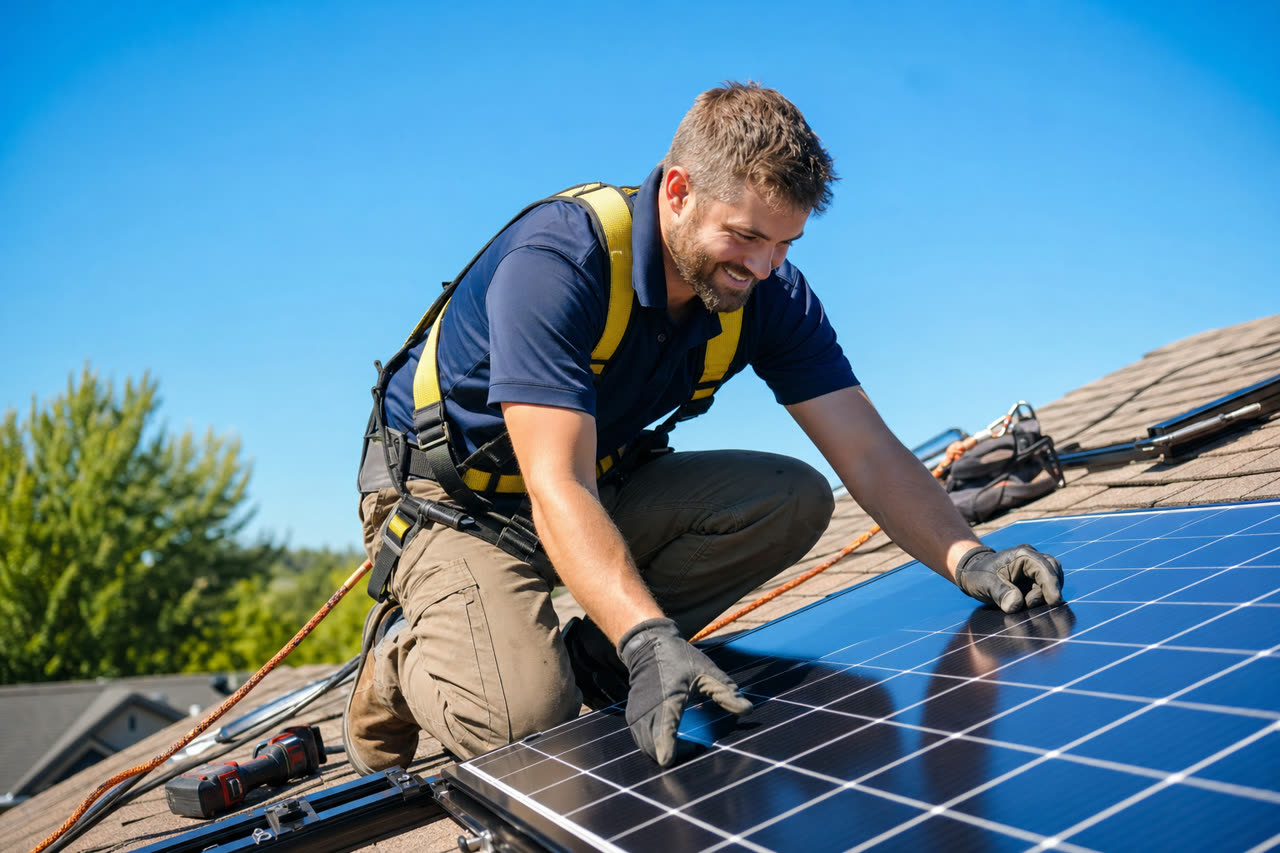
Every month you pay a power bill, you're renting energy at a price that only ever goes up. Solar lets you make your own — and keep more of your money.

What homeowners say
"The assessment was genuinely no-pressure. They showed us the numbers, we saw the payback, and our bill's dropped by more than half."
"Easiest part was the first step — filled in the form, got a call, and had a proper quote within the week. No jargon."
"We were nervous about the cost. Turns out with finance it was less per month than we were already paying the power company."
New Zealand's residential solar market has grown steadily over the past five years, driven primarily by rising power prices rather than government incentives. Unlike Australia, there is no national solar subsidy in NZ — homeowners install solar because the economics make sense on their own.
NZ power prices are among the higher in the developed world, which is exactly what makes solar attractive. Every unit of power your panels generate is a unit you don't pay a retailer for, typically at 25–33 cents per kWh depending on your plan and region. Export any surplus to the grid and your retailer pays you a feed-in tariff — usually 8–15 cents per kWh.
As of September 2026, electricians installing grid-connected solar and battery systems in NZ are required to hold a specific accreditation from the Electrical Workers Registration Board (EWRB), the government regulator for electrical workers in New Zealand. Every installer in the Solar Alliance network holds this accreditation and is SEANZ-accredited.
Solar panels in NZ cost between $8,500 and $20,000+ in 2026. A typical 6.6 kW system — the most common residential size — costs $12,000–$16,000 installed, depending on your roof, location, and equipment.
| System size | Panels (approx) | Typical cost range | Best suited for |
|---|---|---|---|
| 3 kW | 7–8 panels | $8,500–$11,000 | Small households, low power use |
| 6.6 kW | 14–16 panels | $12,000–$16,000 | Most NZ homes (most common size) |
| 10 kW | 22–25 panels | $17,000–$22,000 | Large households, high usage |
| 6.6 kW + battery | 14–16 panels | $18,000–$28,000 | Households wanting evening coverage |
These are indicative ranges based on current NZ market pricing. Your actual cost depends on your roof, location, installer, and equipment. The only way to get an accurate number is an on-site assessment.
What's typically included: panels, inverter, racking, EWRB-certified installation, grid connection with your lines company, monitoring app. Usually extra: battery storage, switchboard upgrades, scaffolding for complex access.
Most NZ installers now offer interest-free or low-interest finance — often making the monthly repayment less than your current power bill saving. Full NZ solar panel cost guide →
New Zealand homes with a typical 6.6 kW solar system save between $1,161 and $1,368 per year, depending on region, according to the government's Energy Efficiency and Conservation Authority (EECA). Regional estimates (EECA solar savings data):
| Region | Estimated annual saving |
|---|---|
| Bay of Plenty | $1,368 |
| Gisborne | $1,293 |
| Auckland | $1,246 |
| Hawke's Bay | $1,235 |
| Waikato | $1,208 |
| Southland | $1,196 |
| Canterbury | $1,180 |
| Otago | $1,161 |
Source: EECA. Figures assume a typical 6.6 kW system with average household usage. Your actual saving depends on roof orientation, shading, and power use patterns.
Roof orientation matters. North-facing roofs generate the most. East or west-facing roofs generate 15–25% less. South-facing panels rarely stack up economically.
Self-consumption is key. You save the full retail rate (25–33c/kWh) on power you use directly. Exported power earns only the feed-in tariff (8–15c/kWh). The more power you use during daylight hours, the faster your payback. See whether solar is worth it for your home →
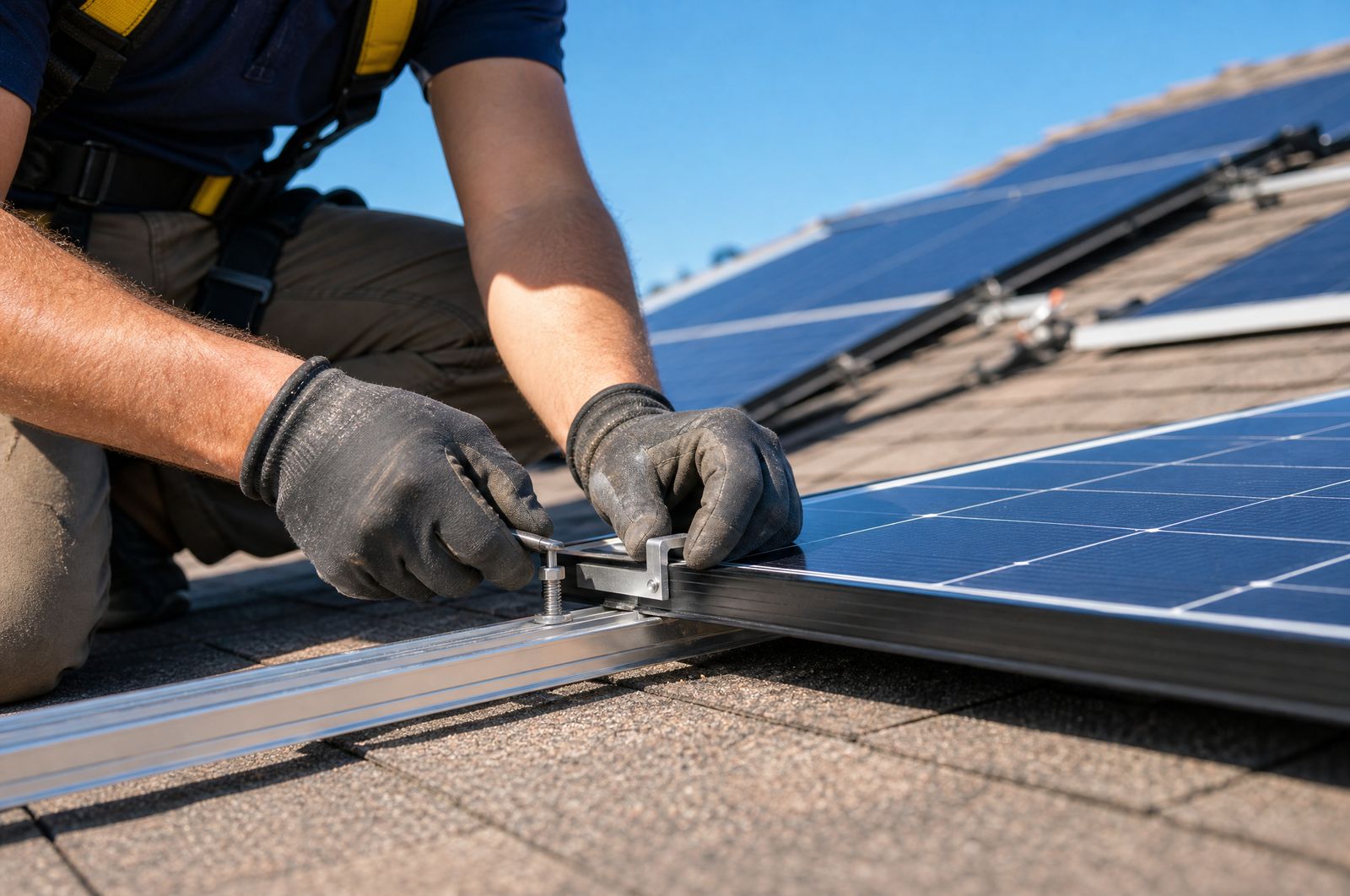
All installers in the Solar Alliance network are SEANZ-accredited and hold the required EWRB certification. Full NZ solar installation guide →
There is no national solar grant in New Zealand as of 2026. If you see advertising suggesting a government solar rebate is available to all NZ homeowners, treat it with scepticism.
What does exist:
The absence of a government grant doesn't change the economics for most homeowners — the case for solar is built on avoiding retail power prices. Full guide to NZ solar subsidies and rebates →
For most NZ homeowners with an unshaded, roughly north-facing roof and a power bill over $200/month, solar will pay for itself. Typical payback: 10–15 years for a grid-tied system, after which you're generating essentially free power.
Whether it's worth it in your case depends on four factors: your roof (orientation, pitch, shading, condition), your power bill, when you use power during the day, and your power rate.
When solar might not make sense: very low power bills (under $100/month), heavily shaded roofs, roofs in poor condition needing replacement, or plans to move within 5 years.
The only way to know your actual numbers is a free on-site assessment. A reputable installer will tell you honestly if the numbers don't stack up. Full is-it-worth-it guide →

Solar Alliance is a New Zealand solar referral service that connects homeowners with SEANZ-accredited, EWRB-certified local installers and arranges free, no-obligation on-site assessments. We are not a solar installer ourselves — we match you with a vetted local installer and stay on your side of the table.
Every installer in our network:
The assessment is completely free and carries no obligation. If the numbers make sense, you'll have a clear quote to consider. If they don't, you haven't spent anything finding out.
We don't receive a margin on the cost of your installation. Installers pay a referral fee for the introduction — your quote price is not affected.
Rather than committing to a single solar company, NZ homeowners can compare vetted local installers through Solar Alliance — which only works with SEANZ-accredited, EWRB-certified installers who meet its quality and insurance standards. Find solar quotes near you →
A typical residential system runs $8,500–$20,000+. A 6.6 kW system — the most common size — costs $12,000–$16,000 installed. Your exact cost depends on your roof, location, and equipment. A free on-site assessment gives you an accurate quote.
No national solar grant exists in NZ as of 2026. The main financial return comes from avoiding retail power rates on power you generate and use yourself, plus feed-in tariff payments from your retailer for surplus exports.
Typically 10–15 years for a grid-tied system, depending on location, roof orientation, usage, and system size. Sunnier regions with high daytime power use tend to see payback closer to 10 years.
Most standard residential rooftop installations do not require building consent. Your installer handles the grid connection approval with your lines company. Heritage buildings or structurally unusual roofs can be exceptions.
No. Solar Alliance connects NZ homeowners with SEANZ-accredited, EWRB-certified local installers and arranges a free on-site assessment. You deal directly with the installer throughout — we make the introduction and ensure they meet our standards.
It's free, it's honest, and it takes about a minute. See your numbers before you decide anything.
Get my free assessment →No cost · No obligation · NZ-wide