What Does a Solar Panel Warranty Actually Cover in Australia?
A solar panel warranty is a set of manufacturer and installer guarantees — typically three separate ones, not a single figure — that cover a solar system's parts, its long-term power output, and the quality of its installation, each for a different length of time. In Australia these are the product (parts) warranty against manufacturing defects, the performance warranty covering long-term output, and the installer workmanship warranty covering the install itself. Quotes rarely spell out which is which, and the terms attached to each vary a lot between a budget panel and an established Tier 1 brand.
Quick answer: in Australia, expect roughly a 10–25 year product warranty, a 25–30 year performance warranty guaranteeing a large majority of original output at the end of that term, and a separate 5–10 year installer workmanship warranty — confirm all three, in writing, before you sign. For how long panels actually keep producing and what upkeep they need day to day, see our solar panel maintenance guide.
What is a solar panel warranty?
A solar warranty is a set of guarantees that protect different parts of your system for different lengths of time — and reading a quote as if there's just one number to compare is where most people get confused. In Australia, a system typically comes with three distinct types of cover:
- Product (parts) warranty — the manufacturer's guarantee against defects in materials or workmanship in the physical panel itself: cracked glass, corroded frames, faulty junction boxes, and similar manufacturing faults.
- Performance warranty — a separate manufacturer guarantee that the panel will still generate at least a set percentage of its original rated output after a set number of years, independent of whether any part has physically failed.
- Installer workmanship warranty — the installer's own guarantee covering the quality of the installation: mounting, wiring, flashing, and weatherproofing. This is set by the installer, not the panel manufacturer, and is worth confirming in writing since it isn't standardised the way the other two broadly are.
All three matter, and none of them substitute for the others — a panel that's still structurally sound under its product warranty can still be under-generating relative to its performance warranty, and a poorly sealed roof penetration is a workmanship issue even if the panel itself is fine. Under Australian Consumer Law, you're also entitled to a repair, replacement, or refund for a major failure regardless of what the manufacturer's written warranty says — see the ACCC's guidance on consumer guarantees for how that baseline protection sits alongside a manufacturer's warranty.
Typical solar warranty terms in Australia
Terms vary by brand and panel tier, so treat the ranges below as what to expect and compare against, not a guarantee any specific quote will match — always ask the installer to confirm the exact figures for the panel and inverter being quoted.
| Warranty type | Typical term (2026) | What it covers |
|---|---|---|
| Product (parts) — panels | 10–25 years | Manufacturing defects in the physical panel |
| Performance — panels | 25–30 years | Guaranteed minimum output (commonly 80–90% of original at year 25, varying by brand) |
| Inverter | 5–12 years (often extendable) | Manufacturing defects and premature failure of the inverter unit |
| Installer workmanship | 5–10 years | Mounting, wiring, and weatherproofing quality |
Ranges reflect common terms across established Tier 1 brands sold in Australia in 2026; budget or lesser-known brands can sit well below the low end, particularly on the product warranty. Get the exact figures in writing for the specific brand on your quote rather than assuming the top of any range.

The inverter is worth particular attention: it's the component most likely to need replacing within a panel's lifetime, and its warranty term is often shorter than the panels' — our maintenance guide covers typical inverter lifespan and servicing in more detail.
What voids a solar warranty
Warranty terms are conditional, and a claim can be refused if the system wasn't installed, used, or maintained the way the terms require. The most common reasons a claim gets knocked back:
- Non-accredited installation — using an installer who isn't SAA-accredited can void both the manufacturer's warranty and disqualify the system from the STC (Small-scale Technology Certificate) rebate, since SAA accreditation is a standard condition of both.
- Unauthorised modifications or repairs — anyone other than a licensed technician opening an inverter, altering wiring, or attempting a DIY repair typically voids the relevant warranty on that component.
- Physical damage from misuse — damage from incorrect cleaning methods (pressure washers, abrasive brushes), unauthorised roof work, or failure to report storm damage promptly.
- Missing documentation — many manufacturers require warranty registration within a set window after installation (commonly 30–90 days); missing it can reduce the term or void cover entirely.
- Reselling without transfer — some warranties are tied to the original owner and require a formal transfer if the property is sold; check the terms if you're buying a home with an existing system.
None of this is unusual by Australian consumer-goods standards — it's the same logic as a car or appliance warranty — but solar systems sit on a roof for 25-plus years, so the paperwork matters more than it would for something you'd replace in a few years anyway.
Checking and registering your warranty
Most manufacturers require the installation to be registered against the panel's serial numbers to activate full warranty cover — an installer forgetting this step is a genuine, avoidable risk. To protect yourself:
- Get the paperwork at handover — panel and inverter model/serial numbers, the SAA-accredited installer's licence details, and copies of all three warranty certificates (product, performance, workmanship).
- Confirm registration was completed — ask the installer to confirm, in writing, that the system has been registered with the manufacturer, or register it yourself if the manufacturer allows owner registration.
- Keep a maintenance record — most warranty terms expect reasonable upkeep; a simple log of any cleaning, inspection, or servicing makes a future claim faster to resolve, as our maintenance guide also notes.
- Store everything together — a single folder (physical or digital) with the install contract, warranty certificates, and STC paperwork saves time if you ever need to make a claim or sell the property.
If you already have a system and aren't sure what's registered, contact your installer first — they hold the original paperwork — and the panel manufacturer directly if the installer is no longer contactable.
If the installer or manufacturer closes down
If a solar installer goes out of business, its workmanship warranty is typically lost, but the manufacturer's product and performance warranties usually survive — especially if the warranty is insurance-backed. This is a real risk over a 25-year timeframe: the Australian solar industry has seen both installer and panel-brand closures. What actually happens depends on which warranty is affected:
- Installer workmanship warranty — if the installer closes, this cover is typically lost, since it isn't backed by a third party in most cases. This is the strongest argument for choosing an established installer with a track record, not just the cheapest quote.
- Manufacturer product/performance warranty — larger Tier 1 manufacturers often carry insurance-backed warranty products precisely for this scenario, where a third-party insurer honours the remaining term if the manufacturer exits the market. Ask specifically whether the panel brand's warranty is insurance-backed before you buy, particularly for a lesser-known brand.
- Australian Consumer Law still applies — the ACCC's consumer guarantees exist independently of any manufacturer's written warranty and don't simply disappear if a company closes, though pursuing a remedy against a defunct company is harder in practice than making a straightforward warranty claim.
This is one of the clearest reasons brand and installer reputation matter as much as price when comparing quotes — see our solar panel installation cost guide for what a realistic install budget looks like alongside these considerations.
Does a home battery have the same warranty?
No — a home battery carries its own, separate warranty terms from the solar panels, typically expressed differently again: a battery warranty is commonly framed around a number of charge cycles as well as years (e.g. a guaranteed capacity retention after a set cycle count), reflecting how batteries degrade with use rather than just age. If you're adding a battery under the federal Cheaper Home Batteries Program rebate, SAA accreditation of the installer is again a standard condition of both the rebate and the battery manufacturer's warranty, so the same non-accredited-installer risk applies. Confirm the battery's specific warranty terms separately from the panels — don't assume they match.
Choosing an installer with warranty protection in mind
The lowest quote on paper isn't automatically the best value once warranty risk is factored in — an installer who's been trading for a decade and a panel brand with a genuine Australian presence both reduce the chance you're left holding an unenforceable warranty.
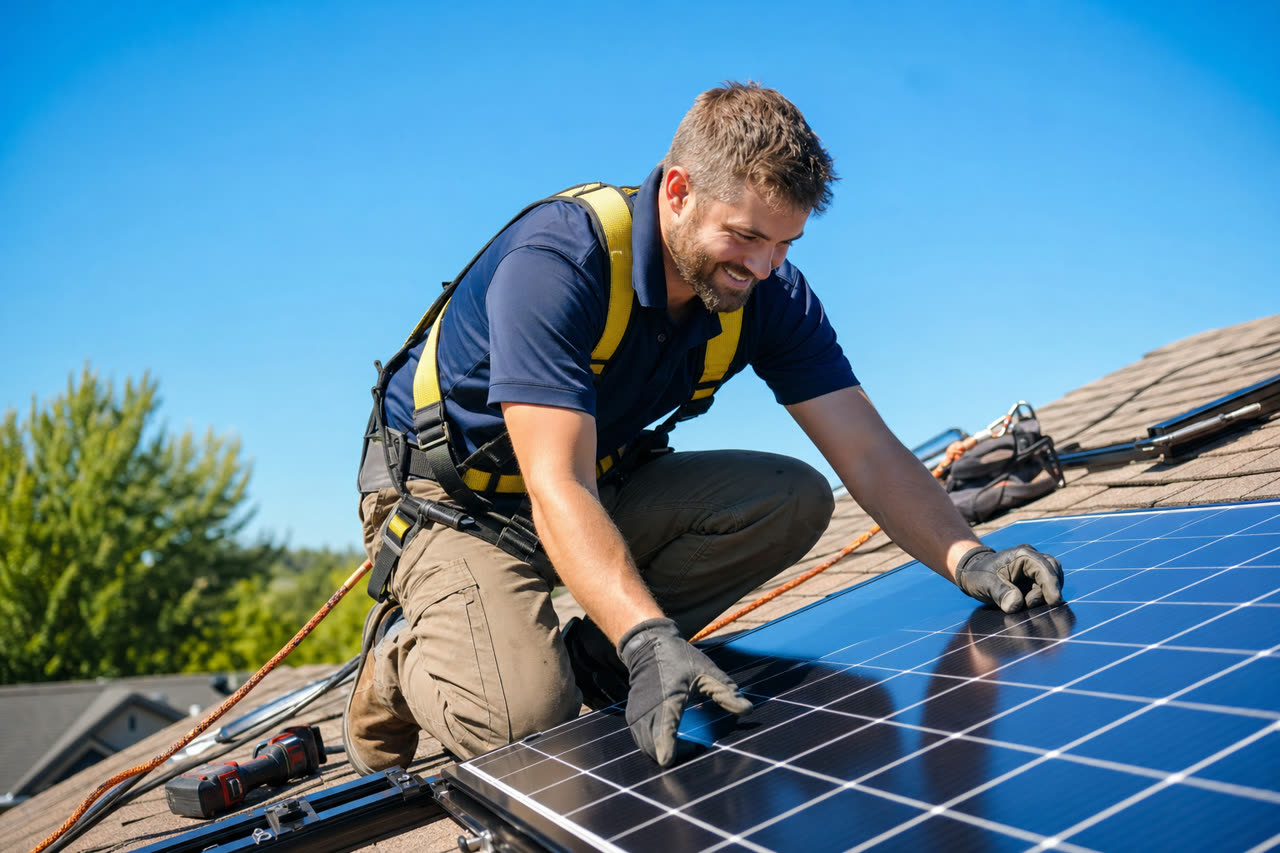
- Ask how long the installer has been trading — a workmanship warranty is only as good as the business standing behind it in 5–10 years' time.
- Ask if the panel warranty is insurance-backed — particularly relevant for less established brands.
- Get all three warranty terms in writing — product, performance, and workmanship — before signing, not just a verbal assurance.
- Compare like for like — a cheaper quote using a shorter-warranty panel isn't necessarily worse, but it should be an informed trade-off, not a surprise found later.
These are exactly the questions worth raising during the quoting process covered in our installation cost guide, alongside price.
Common questions
How long is a solar panel warranty in Australia?
Typically 10–25 years for the product (parts) warranty and 25–30 years for the performance warranty, plus a separate 5–10 year installer workmanship warranty. Exact terms vary by brand — confirm all three in writing.
What's the difference between a product warranty and a performance warranty?
A product warranty covers manufacturing defects in the physical panel. A performance warranty separately guarantees a minimum output level (commonly 80–90% of original) after a set number of years, even if no part has failed.
What voids a solar panel warranty?
Common causes include using a non-SAA-accredited installer, unauthorised repairs or modifications, damage from incorrect cleaning (like pressure washers), and missing the manufacturer's registration window after installation.
What happens to my warranty if the installer goes out of business?
The installer's own workmanship warranty is typically lost. The manufacturer's product and performance warranties may still apply, especially if insurance-backed — ask about this before buying. Australian Consumer Law protections also apply independently.
Does a solar battery have the same warranty as the panels?
No, battery warranties are separate and usually framed around both years and charge cycles rather than years alone. Check the battery's specific terms — don't assume they match the panel warranty.