How Much Does a 6kW Solar System Cost in NZ?
A 6kW solar system in New Zealand — sold almost everywhere as a 6.6kW array — typically costs $12,000–$16,000 fully installed in 2026. That price already includes the panels, inverter, mounting, and EWRB-certified installation; NZ has no national rebate, so this is the real number to budget against, not a pre-rebate sticker price.
"6kW solar system" and "6.6kW solar system" refer to the same install in almost every NZ quote: installers commonly pair a 6.6kW panel array with a smaller inverter, so a system searched for as "6kW" is the 14–16 panel setup most NZ homes end up with.
This guide breaks down what's in that price, what pushes it up or down, what a battery adds, and how long it typically takes to pay for itself.
6kW solar system cost by configuration
A 6.6kW solar system is a rooftop solar installation of roughly 14–16 panels with a combined panel capacity of about 6.6 kilowatts — the standard NZ configuration installers build whenever a homeowner asks for a "6kW system." These are the typical fully-installed prices for that size in 2026:
| Configuration | Panels | Installed price (2026) | Best for |
|---|---|---|---|
| 6.6kW solar only | 14–16 | $12,000–$16,000 | Most NZ homes — the standard mid-size system |
| 6.6kW + battery | 14–16 + battery | $18,000–$28,000+ | Evening coverage and backup during outages |
Indicative NZ pricing, 2026. See the full solar panel cost guide for every system size from 3kW to 10kW+.
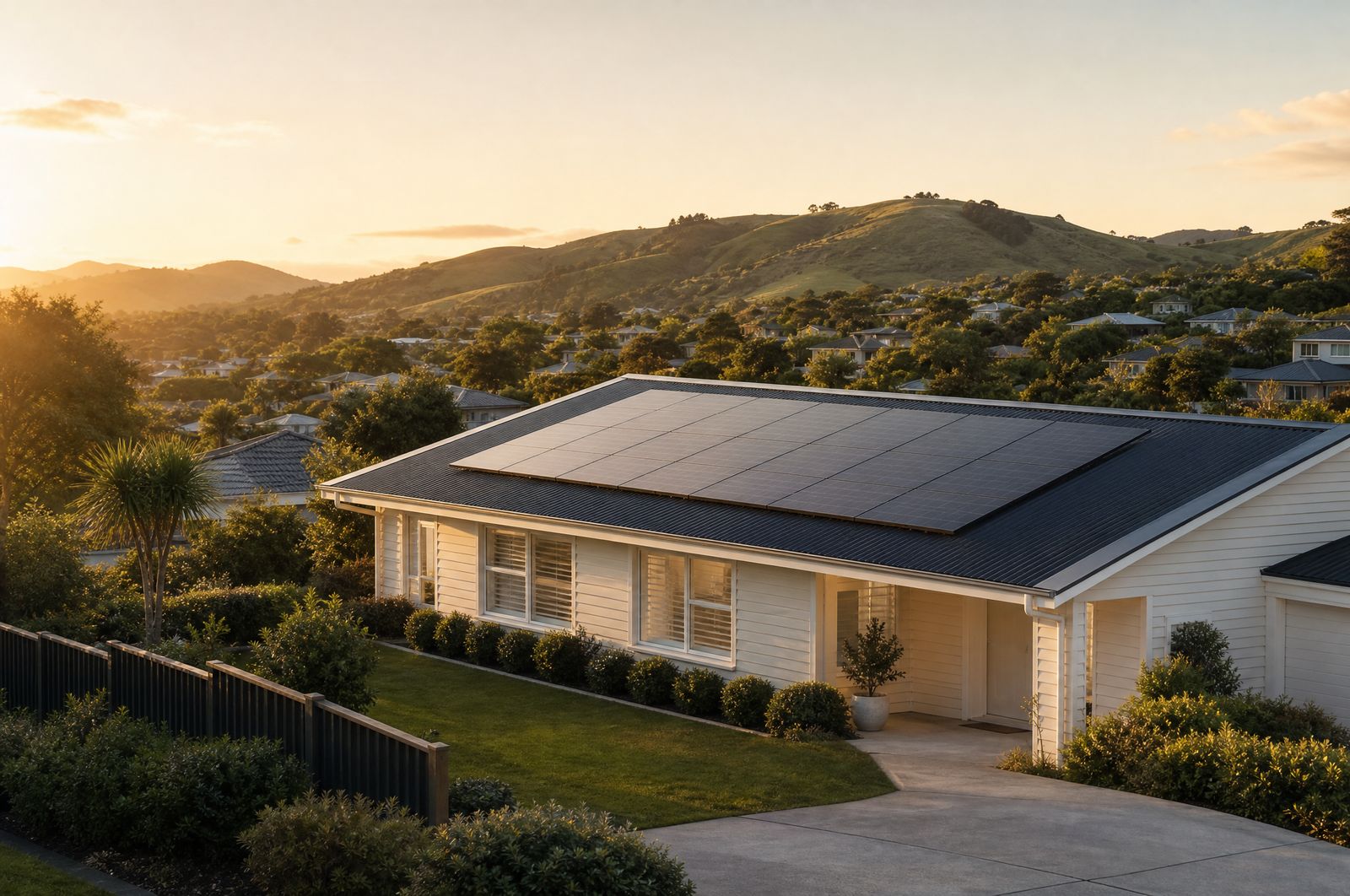
Why "6kW" and "6.6kW" mean the same system: many NZ installers pair a 6.6kW panel array with a 5kW-class inverter, oversizing the panels slightly against the inverter's rated output. That's the industry-standard configuration behind almost every quote you'll get for a "6kW system" — so the price above is the real number to budget against, not a smaller, cheaper system you're not actually being offered.
What's included in the price
A genuine installed price for a 6.6kW ("6kW") system in NZ should cover the full job. Check your quote includes:
- Solar panels — typically monocrystalline, 14–16 panels for this size.
- Inverter — converts the panels' DC output into usable AC power for your home.
- Mounting and racking — the frame fixing panels to your roof type.
- EWRB-certified installation — required by law; your installer must be registered with the Electrical Workers Registration Board.
- Grid connection application — lodged with your local lines company so the system can legally export power.
- Monitoring app — to track generation and usage in real time.
Typically extra, not included in the base price: battery storage, switchboard upgrades on older homes, and scaffolding for steep or multi-storey roofs.
What affects the price
Within the $12,000–$16,000 range, several things move your actual 6.6kW price up or down:
- Roof type and pitch — tile roofs generally cost more to mount on than metal roofing; steep or multi-storey roofs add scaffolding and time.
- Panel and inverter brand — premium Tier 1 panels and name-brand inverters cost more than budget equipment, though the panel count for a 6.6kW system stays the same either way.
- Switchboard condition — older switchboards sometimes need an upgrade before a system can be connected, adding to the job.
- Location and access — remote and rural installs can carry a freight or travel surcharge; easy roof access lowers labour time.
Cost to add a battery
Adding a battery to a 6.6kW system typically lifts the installed price to $18,000–$28,000+, with the battery itself accounting for most of the difference. A battery lets you use daytime generation in the evening and during outages, but many NZ homeowners start panels-only and add a battery later once the panels-only system has paid down some of its cost. See is solar worth it in NZ for the numbers on payback with and without a battery.
Payback and savings without a rebate
New Zealand has no national rebate for residential solar — the case for a 6.6kW system has to stand on savings alone, not a subsidy that shrinks the sticker price. Those savings come from two places: electricity you no longer buy at the retail rate, and a lower feed-in credit for anything you export instead of use.
A feed-in tariff is the rate your power retailer pays for electricity your system exports to the grid, credited straight to your power bill. Retail power prices in NZ are among the highest in the developed world, commonly quoted in the 25–33 cents/kWh range — use a tool like Powerswitch to check your own plan's rate before estimating savings. Feed-in tariffs sit below the retail rate, so a system sized to your daytime usage — rather than oversized to export — usually returns more value.

A 6.6kW system typically pays for itself in 10–15 years, with sunnier regions and higher daytime-usage households toward the faster end. See is solar worth it in NZ for the full payback and savings walkthrough.
How to get an accurate price
Because your actual price depends on roof, location, and switchboard condition, a desktop estimate is always a range — the only way to get an exact number is a site assessment. When comparing 6.6kW quotes:
- Confirm the price is all-in (panels + inverter + installation + grid connection), not equipment-only with labour "to be quoted."
- Check the installer is EWRB-certified and will lodge your grid connection application.
- Get two to three quotes — installed price varies more between installers than panel pricing does.
- Ask what happens if a switchboard upgrade is needed after the site visit — some installers quote it as a fixed add-on, others as a variable cost.
A free on-site assessment gives you a fixed, itemised price for your roof rather than a rough estimate.
Common questions
How much does a 6kW solar system cost in NZ?
A 6kW system is almost always quoted and installed as a 6.6kW array — the NZ industry standard for this size — and typically costs $12,000–$16,000 fully installed in 2026, including panels, inverter, and EWRB-certified installation.
Is a 6kW solar system the same as a 6.6kW system?
Yes, in almost every NZ quote. Installers commonly pair a 6.6kW panel array with a smaller inverter, so a system searched for as "6kW" is the same 14–16 panel install marketed as 6.6kW.
How much does a 6.6kW system with a battery cost?
Adding a battery typically lifts the installed price to $18,000–$28,000+, with the battery accounting for most of the difference. Many homeowners start panels-only and add a battery later.
Is there a government rebate for solar panels in NZ?
No. New Zealand has no national solar rebate or grant as of 2026 — savings come from avoiding retail power prices and a feed-in credit for exported power, not a subsidy on the purchase price.
How long does a 6.6kW system take to pay for itself?
Typically 10–15 years, depending on your region's sun hours, your daytime power usage, and your retailer's feed-in rate — sunnier regions and higher daytime-usage households tend toward the faster end.