Solar Battery Calculator: How Much Battery Storage Do You Need?
Most Australian households land on a 10–13 kWh usable battery once properly sized — but the right number for your home depends on your evening electricity use, your solar system size, and whether you want partial bill offset or whole-home blackout backup.
Sizing a solar battery means matching a battery's usable storage capacity, in kilowatt-hours (kWh), to your household's actual overnight electricity use and backup goals — rather than picking a size off a brochure or a generic online calculator.
Quick answer: 5–7kWh usable suits light evening top-up only, 10–13kWh usable covers most typical household overnight use (the most common installed range), and 15kWh+ usable suits larger households or a whole-home blackout backup goal.
What actually determines the battery size you need
Battery capacity is measured in kWh — the amount of electricity it can store and discharge — while your evening and overnight electricity use is what that capacity needs to cover. Installers weigh four inputs, roughly in this order:
- Evening and overnight electricity use — the kWh your household draws roughly from sunset to sunrise, since that's the window a battery replaces grid power instead of your panels covering it directly.
- Solar system size — a battery can only store what your panels generate above daytime household use, so an undersized solar system leaves a bigger battery only partly charged on an average day. See our how solar panels work guide for how panels and batteries interact.
- Backup goal — covering a few essentials (fridge, lights, wifi router, some power points) through an outage needs far less capacity than backing up the whole house.
- Usable vs total capacity — most home batteries reserve a small buffer of their rated capacity to protect battery life, so the usable kWh you can actually draw sits slightly below the number on the spec sheet.
Get these four right and sizing becomes a straightforward calculation rather than a guess — which is also what a proper on-site assessment checks before quoting.
A simple method to size your battery
A back-of-envelope method you can run yourself, before a proper on-site assessment confirms it:
- Step 1 — find your evening/overnight use. Check your retailer's app or your smart meter's interval data for the kWh used roughly from sunset to sunrise on a typical day.
- Step 2 — add a buffer. Batteries lose some energy to round-trip efficiency and reserve headroom to protect battery health, so add roughly 10–20% to your overnight figure to land on a usable capacity target.
- Step 3 — check your solar system can refill it. Your solar system's daily output on an average day needs to comfortably exceed daytime household use plus the battery's usable capacity, or the battery won't reliably charge to full.
Example: a household drawing around 9kWh overnight, plus a 15% buffer, points to roughly a 10kWh usable battery — at the lower end of the 10–13kWh range most Australian homes land on. Treat this as a planning estimate only: an installer's on-site assessment using your actual interval data and roof will always be more accurate, and is free to get.
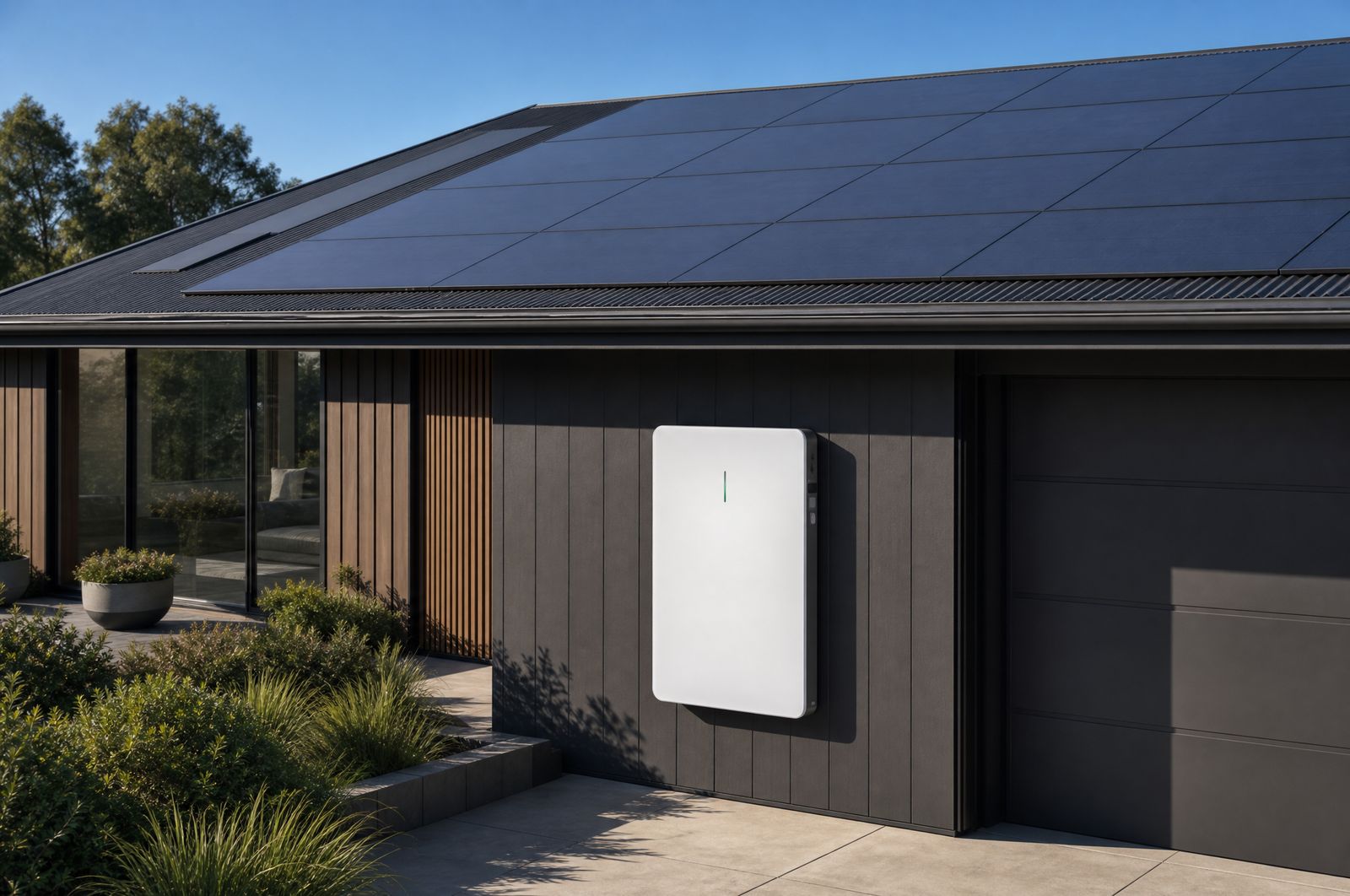
Typical battery size by household and goal
As a general guide only — not a substitute for a site assessment — here's how usable battery capacity typically tracks with household size and backup goal in Australia:
| Household / goal | Typical usable capacity | Best suited for |
|---|---|---|
| 1–2 people, evening top-up only | 5–7 kWh | Partial bill offset, not full backup |
| Typical family, 3–4 people (most common) | 10–13 kWh | Most evening/overnight use covered |
| Larger household or whole-home backup goal | 15 kWh+ | High overnight usage or outage backup |
Figures are typical ranges, not fixed quotes — see our solar battery installation guide for what these sizes cost fully installed.
What these battery sizes cost, after the federal discount
Once you know roughly what usable capacity fits your household, cost tracks closely with that range. These are typical fully-installed Australian prices, after the federal battery discount:
- 5–7 kWh — typically $8,000–$11,000 installed.
- 10–13 kWh — typically $11,000–$16,000 installed, the most common range.
- 15 kWh+ — typically $16,000–$22,000+ installed.
Since 1 July 2025, the Cheaper Home Batteries Program has funded a discount of roughly 30% off the upfront cost of eligible battery systems (5–100kWh usable capacity), applied by the installer at point of sale rather than claimed afterwards. The discount is based on usable capacity and is scheduled to step down gradually through to 2030 — a bigger battery isn't automatically better value if your household usage doesn't fill it most nights, since you're paying more upfront for capacity you won't draw down. See our solar battery installation guide for the full install process, or our solar rebate guide for how this interacts with state-based schemes.
Getting an accurate sizing recommendation
A desktop estimate is always approximate, because it can't see your actual interval data, roof, or existing inverter. When comparing sizing recommendations from installers:
- Ask whether the recommendation is based on your actual interval/smart meter data, not just your postcode or house size.
- Confirm the quoted price is after the federal battery discount, not before it.
- Confirm the installer holds SAA battery-storage accreditation, separate from standard solar accreditation — see our battery installation guide for what to check.
- If you're also sizing solar alongside the battery, see our solar panel installation cost guide for how the two are typically quoted together.

A free on-site assessment turns these estimates into a fixed battery size and price for your own home, and checks whether your existing solar system and inverter can pair with it as-is.
Common questions
How do I calculate what size solar battery I need?
Find your evening/overnight electricity use from your bill or smart meter app, add roughly 10–20% for round-trip efficiency losses and battery headroom, then check your solar system's daily output can refill that capacity. Most Australian homes land on 10–13kWh usable once sized this way.
What size battery does an average Australian home need?
Most Australian households land on a 10–13kWh usable battery, the most common installed range — though 5–7kWh suits lighter evening top-up use and 15kWh+ suits larger households or whole-home backup goals.
Is a bigger battery always better value?
No. The federal battery discount is based on capacity, so a bigger battery costs more upfront — if your household doesn't use enough overnight electricity to draw it down most nights, you're paying for storage you won't use.
Can I size a battery without solar panels installed?
You can, but it's uncommon in Australia — a battery installed without solar charges from the grid on off-peak rates, which forgoes the free daytime charging solar provides and reduces the bill savings a paired system delivers.
How is this different from the solar savings calculator?
The solar savings calculator estimates bill savings from your state and power bill, with an optional battery. This guide focuses specifically on sizing the battery itself — how many kWh of storage your home actually needs — which an on-site assessment can then confirm exactly.