How Many Solar Panels Do You Need for Your NZ Home?
Most NZ homes need a 4kW–6.6kW solar system — roughly 9–16 panels — to cover a meaningful share of household electricity use, with the exact number driven by your daily kWh usage, available roof space, and how much of your own power you want to generate rather than buy from the grid. A 6.6kW system (around 15 panels at today's typical 430–450W panel wattage) has become the size most NZ installers quote by default, which is why it's used as the benchmark in our 6kW solar system cost guide.
Quick answer: a 3-bedroom household typically fits well on a 4kW–5kW system (9–12 panels), while a 4-bedroom or higher-usage household typically needs 6kW–6.6kW (13–16 panels) — use your power bill's daily kWh average as the starting point, not house size alone.
How solar system size is actually calculated
Solar system size is measured in kW (kilowatts) — the system's instantaneous generating capacity — while household electricity use is measured in kWh (kilowatt-hours) consumed per day; sizing a system means matching the first to the second, not to bedroom count. In one line: daily kWh usage, not house size, is what should decide how many panels you install.
Installers size a system around three things, roughly in this order of importance:
- Your daily electricity use (kWh) — the number on your power bill is the real starting point, not the size of your house. A home running a heat pump, hot water cylinder, or EV charging typically needs a bigger system than a similar-sized home without those loads.
- Roof space and orientation — a north-facing roof with no shading fits more panels at higher output than a smaller or partly-shaded roof, which can cap system size regardless of what your usage would otherwise call for.
- Regional sun hours — NZ's regions get different average sun exposure (typically higher in the upper North Island, lower further south), so the same system size generates somewhat more or less depending on where you live.
A proper installer assessment weighs all three — which is why the recommended panel count for two houses of the same size can differ, and why any quote should follow an actual roof survey rather than a generic size chart.
Typical solar system sizes for NZ households
As a general guide — not a substitute for a site assessment — here's how system size typically tracks with household size and usage in NZ:
| Household | Typical daily use | Common system size | Approx. panel count |
|---|---|---|---|
| Studio / 2-bedroom, lower usage | ~10–14 kWh | 3kW–4kW | 7–9 panels |
| 3-bedroom, average usage | ~14–18 kWh | 4kW–5kW | 9–12 panels |
| 4-bedroom or higher usage | ~18–24 kWh | 6kW–6.6kW | 13–16 panels |
| 5+ bedroom, EV or heat pump load | 24kWh+ | 7kW–10kW | 16–22 panels |
Figures are typical ranges, not fixed quotes — the 6.6kW size and its $12,000–$16,000 installed price remain the most common NZ benchmark, but your own usage and roof will move you up or down this table.
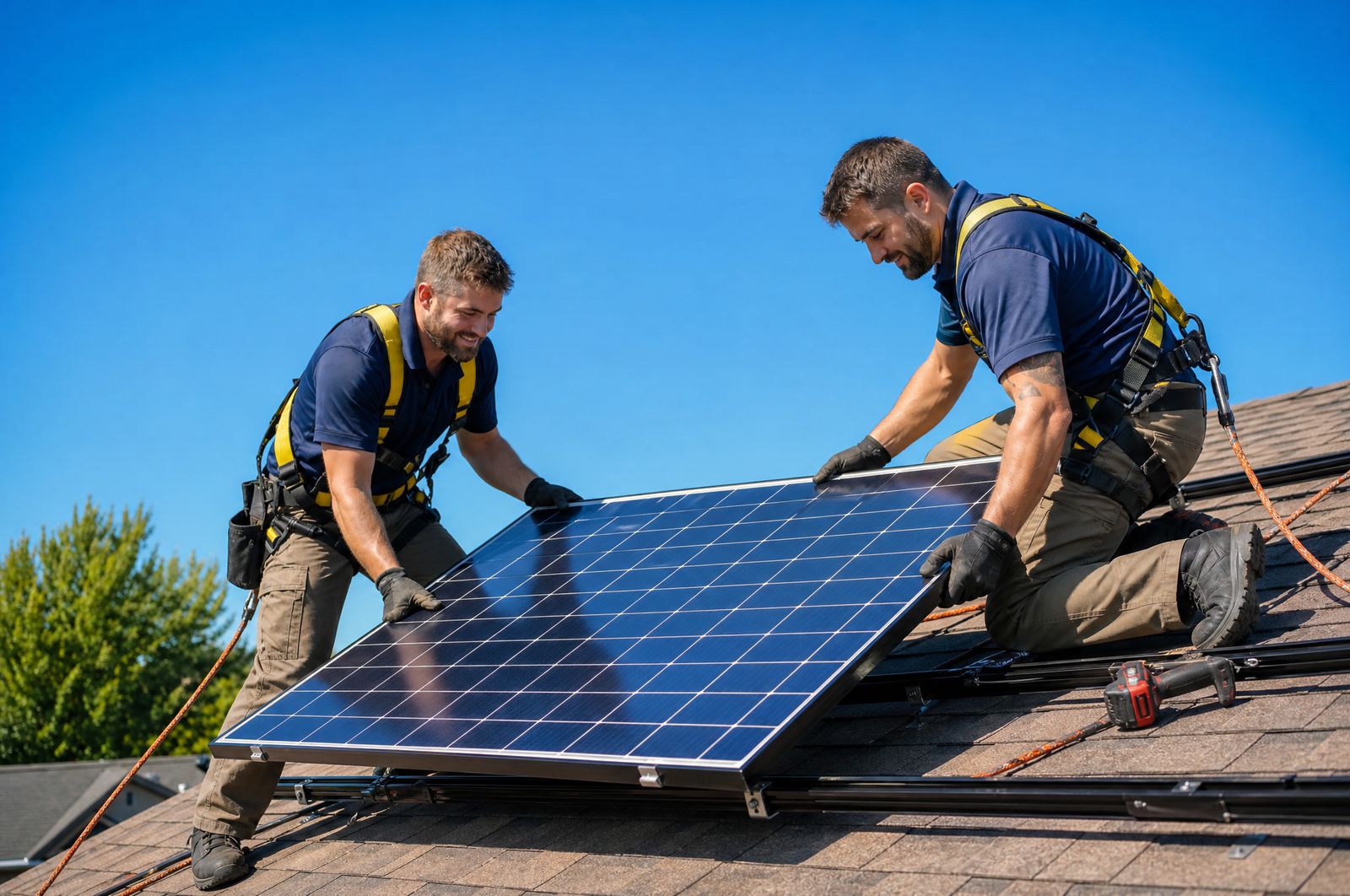
A simple rule of thumb for sizing your system
A simple back-of-envelope method installers use as a starting point, before an on-site assessment:
- Take your average daily electricity use in kWh from a recent power bill.
- Divide by roughly 3.5–4.5 "peak sun hours" per day — the typical NZ range depending on region and season — to estimate the system size in kW needed to cover that use on an average day.
- Divide that system size by your panel's wattage (typically 430–450W for panels installed in 2026) to estimate a rough panel count.
Example: a household using around 18kWh/day, divided by 4 peak sun hours, points to roughly a 4.5kW system — around 10 panels at 450W each. Treat this as a planning estimate only: an installer's on-site assessment using your actual roof and usage data will always be more accurate, and is free to get.

How system size affects installed cost
Once you know roughly what size system fits your household, cost per watt is the fastest way to sanity-check any quote against that size — dividing the total installed price by system wattage puts a 4kW quote and a 6.6kW quote on the same scale, rather than comparing total dollar figures that don't account for how much system you're actually getting.
- Smaller systems (3–4kW) generally carry a slightly higher cost per watt, since fixed costs like the grid connection application are spread over fewer watts.
- The standard 6.6kW size is the benchmark used in our 6kW solar system cost guide, priced at $12,000–$16,000 installed in 2026.
- No national rebate applies in NZ — unlike Australia's STC scheme, savings here come from avoiding retail power prices and, where offered, a feed-in credit for exported power, not an upfront government rebate. Budget the full installed price your quote shows.
Installation itself must be carried out by an EWRB-certified installer regardless of system size — confirm this on any quote before comparing price.
Common questions
How many solar panels does an average NZ house need?
Most NZ households land on a 4kW–6.6kW system, which works out to roughly 9–16 panels depending on daily electricity use, roof space, and regional sun hours. Get a free site assessment for an exact count.
What size solar system do I need for a 4-bedroom house in NZ?
A 4-bedroom household with typical usage generally needs a 6kW–6.6kW system — around 13–16 panels — though actual daily kWh use and roof space can move this up or down.
How do I calculate how many solar panels I need?
Divide your average daily kWh use (from a power bill) by 3.5–4.5 peak sun hours to estimate system size in kW, then divide by your panel's wattage (typically 430–450W) for a rough panel count.
Does house size determine solar system size in NZ?
Not directly — electricity usage is the stronger driver. A smaller house with a heat pump, hot water cylinder, or EV charging can need more panels than a larger house with lower usage.
Is there a rebate that reduces how many panels I can afford in NZ?
No. New Zealand has no national solar rebate, so system size should be planned against the full installed price and expected savings from avoided power costs and feed-in credits, not a rebate discount.