How Much Does a Solar Battery Cost in NZ?
A home solar battery in New Zealand typically costs $8,000–$15,000 installed for a 10–15kWh system, on top of the solar panels themselves — market average pricing works out to around $1,219 per kWh installed in 2026. A Tesla Powerwall 3 (13.5kWh) runs roughly $19,000–$24,000 installed; BYD and Pylontech units in the 10–13kWh range typically land at $10,000–$15,000.
A solar battery is a device that stores surplus electricity generated by rooftop solar panels during the day, for use in the evening, overnight, or during a power outage — instead of that surplus being sold back to the grid at a low export rate.
Quick answer: there's no government rebate reducing that price in New Zealand — unlike Australia, NZ has no national battery subsidy — so the number above is close to what you'll actually pay, before any bank or council finance.
This guide covers typical NZ battery pricing by size, what moves the price up or down, real payback numbers from an actual NZ install, and how to finance one — alongside our guide to solar system cost if you're pricing panels and a battery together.
Solar battery cost by size
A typical Kiwi household uses around 20kWh of power a day, which is why most residential batteries installed in NZ sit in the 10–15kWh range — big enough to cover an evening and overnight, without paying for capacity that rarely gets used:
| Battery size | Typical installed price (NZD) | Best suited for |
|---|---|---|
| 8kWh (smallest practical size) | ~$9,000–$11,000 (estimated at the market average rate) | Light evening top-up, smaller household |
| 10–13kWh | $10,000–$15,000 | Most NZ homes (most common range) |
| 13.5kWh (Tesla Powerwall 3) | $19,000–$24,000 | Higher-spec brand, larger overnight loads |
| 15kWh+ | from ~$18,000 (estimated at the market average rate) | Larger households, heavier winter usage |
Indicative NZ pricing, 2026, installed. The 10–15kWh, Powerwall 3, and $1,219/kWh market-average figures are directly reported; the 8kWh and 15kWh+ rows are this guide's own estimate, calculated by applying that $1,219/kWh average to those sizes rather than a directly reported price. BYD and Pylontech units in the 10–13kWh band typically price at the lower end of that range; Tesla Powerwall 3 supply-only is roughly $15,600, with the $19,000–$24,000 figure covering full installation. Source: Solar Scout, Solar Battery Storage NZ.
Beyond Tesla, BYD, and Pylontech, Enphase and Sungrow are the other two brands NZ installers most commonly quote. Enphase's IQ Battery runs at a premium, upwards of roughly $1,200 per kWh, and only really makes sense if you're already on Enphase microinverters; Sungrow tends to price more competitively, in the rough $800–$1,000 per kWh band, and pairs natively with its own hybrid inverters. As with any brand comparison, get the $/kWh and warranty terms in writing rather than comparing sticker price alone. Source: Solar Scout, Compare Solar Batteries NZ.
For a government-sourced sense-check on the combined cost of solar-plus-battery (not battery alone), EECA's own figures put a small system with a 5kWh battery at $13,500, a medium system with a 10kWh battery at $21,500, and a large system with a 20kWh battery at $40,000 — all-in, panels and battery together. Those totals sit consistent with adding our panel-only and battery-only figures side by side. Source: EECA, Breaking down home solar costs and savings.
Installers generally treat 8kWh as the smallest size worth fitting, and note that battery prices have largely stopped falling through 2026 — China's phase-out of solar and battery export tax rebates plus rising silver and copper costs have flattened what used to be a steadily-declining price curve, so waiting for a further drop isn't a reliable strategy. That's a New Zealand-specific pattern: raw battery cell packs did fall roughly 45% globally in 2025 to around $120 per kWh, but that's the cell only — by the time freight, the inverter, installer labour, and certification are added on top, NZ installed prices have stayed close to $1,220 per kWh since 2024. A further global cell-price drop won't necessarily show up in your installed quote.
What affects the price you're quoted
Two batteries with the same kWh rating can still come out at very different installed prices. What actually moves the number:
- Battery chemistry and brand — premium brands like Tesla price meaningfully above budget-to-mid brands like BYD or Pylontech for similar usable capacity.
- New install vs retrofit — adding a battery alongside new solar panels is usually more efficient than retrofitting one to an existing system, since the inverter and wiring are designed for both from the outset.
- Inverter compatibility — if your existing solar inverter can't pair with the battery, a hybrid inverter swap adds to the retrofit cost.
- Switchboard work — older switchboards sometimes need upgrading to safely add battery circuits and isolators.
- How much capacity you actually need — sizing to your real daily usage (most NZ homes land around 20kWh/day) avoids paying for headroom you won't use; see our guide on sizing a system for your house.
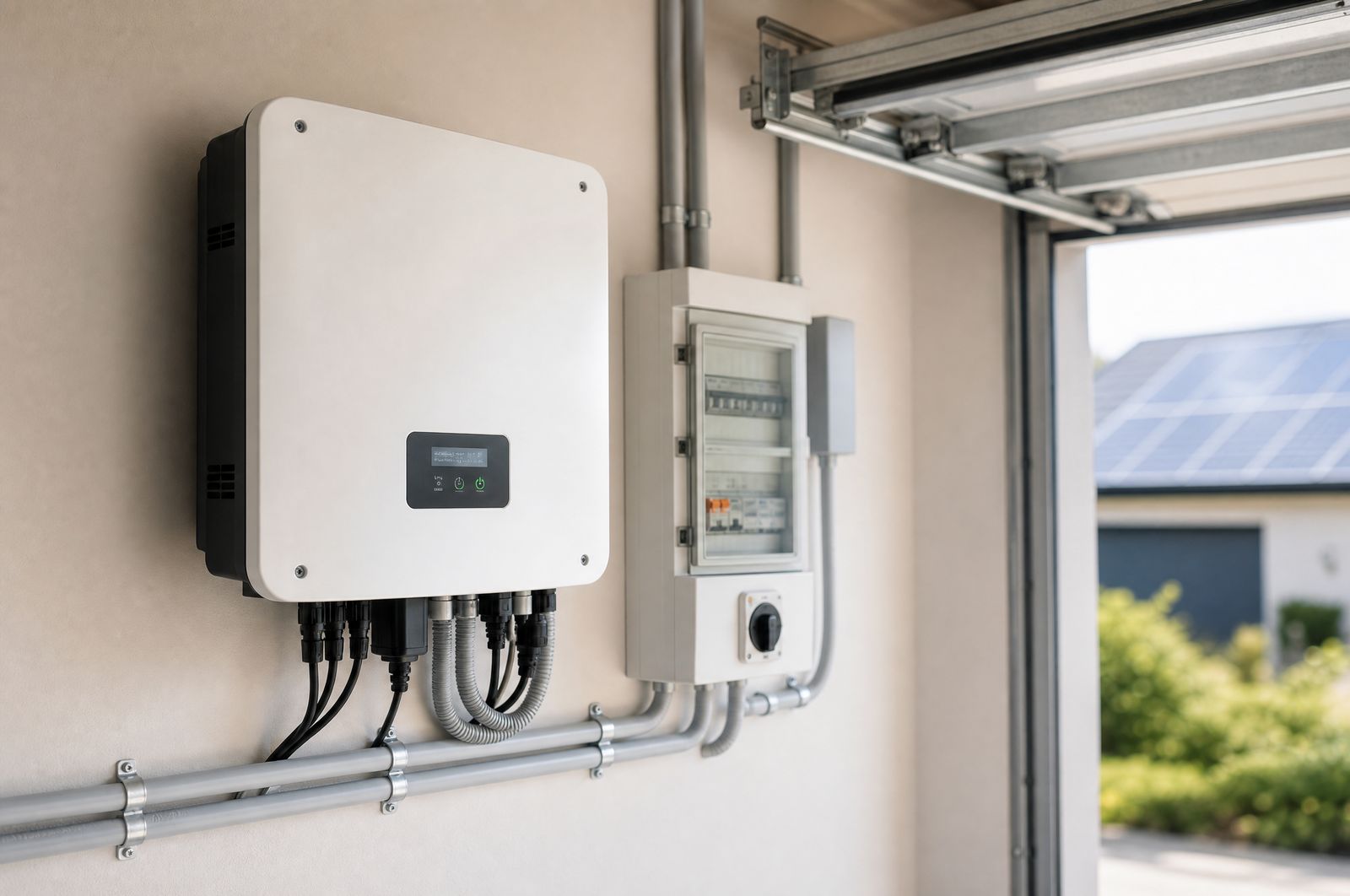
Installer accreditation matters too, and it's changing: from around 1 September 2026, an installing electrician must hold a Mains Parallel Generation endorsement on their practising licence with the Electrical Workers Registration Board (EWRB) to legally connect a grid-tied solar or battery system — on top of the Sustainable Energy Association of New Zealand (SEANZ) membership most reputable installers already carry. Confirm your installer holds it (or is booked in to) before you sign. Source: SEANZ, Electrical Licence Endorsement changes.
What size battery do you actually need?
Sizing to your household, not to the biggest unit an installer sells, avoids paying for capacity that sits idle. Size against your evening and overnight usage specifically — your panels already cover the daytime load directly:
| Household | Battery size | What it covers |
|---|---|---|
| Small (1–2 people) | ~5kWh | Evening essentials — lights, fridge, Wi-Fi, TV |
| Average (3–4 people) | 10–13.5kWh | Most evening and overnight usage covered |
| Large household / EV owners | 20–27kWh | Two battery units, full overnight plus EV top-up |
Source: Solar Scout, Solar Battery Storage NZ.
If you're charging an EV at home, budget roughly an extra 7–10kWh of storage per night on top of your household figure above — a single 13.5kWh battery won't stretch across both the house and the car. Check your power retailer's app for your actual usage between 5pm and 7am before committing to a size; a household using only 8kWh overnight rarely gets full value from a 13.5kWh unit.
AC-coupled vs DC-coupled: which suits a retrofit
AC-coupled batteries use their own dedicated battery inverter, wired in alongside your existing solar inverter — that's what makes them the easier, faster retrofit onto solar you've already got, since the original inverter doesn't need to be touched. DC-coupled batteries share a single hybrid inverter with the panels, which is more efficient (one AC conversion instead of two) but is really a decision made at the time of a new install — retrofitting one onto an existing AC-coupled solar system usually means replacing the inverter too, adding to the cost.
- AC-coupled — simpler retrofit, compatible with almost any existing solar inverter, slightly lower round-trip efficiency from the extra conversion step. The default choice for adding a battery to solar panels you already have in NZ.
- DC-coupled — higher efficiency, best specified alongside new solar panels on one hybrid inverter, more disruptive and costlier to retrofit onto an already-installed AC-coupled system.
If you're adding a battery to existing solar panels, ask your installer to confirm which type they're quoting — it affects both the installed price and how much of the inverter-compatibility cost above applies to your job.
Why there's no rebate to offset the price
There is no national solar or battery rebate, grant, or subsidy in New Zealand in 2026. A rebate scheme was proposed in 2023 and later shelved, and no replacement has been introduced. This is a genuine, structural difference from Australia's federal battery discount — if you've seen Australian battery pricing quoted online, don't expect NZ pricing to reflect a similar government top-up, because it doesn't.
There is one narrower, newer mechanism worth knowing about, separate from a purchase subsidy: from 1 April 2026 lines companies began paying a small peak-export payment (roughly 5–7c/kWh, in the specific peak windows their network is congested) to households exporting solar power back to the grid. It's real, but modest — real-world value has run to roughly $36–$168 a year in reported cases — and from 1 July 2026 larger retailers must also offer a time-varying export plan. Neither of these reduces the upfront cost of buying and installing a battery the way a purchase rebate would; see our guide on solar buy-back rates for how export pricing works day to day.
Is a solar battery worth it in NZ?
The honest answer depends on your usage pattern, but the numbers behind it are consistent: solar-only payback in NZ typically runs 6–8 years; adding a battery extends that to roughly 10 years, since you're paying more upfront for a system that mostly earns you the difference between the retail import price you'd otherwise pay (roughly 33–42c/kWh) and either the low off-peak export rate (around 8c/kWh common, though some retailers pay 20–24c/kWh in narrow peak windows a battery-less home usually can't reach) or nothing at all.
The value case for a battery is self-consumption, not export income. In one documented NZ example (a solar-plus-battery owner tracked over a full year), solar used directly in the home saved $2,050 over the year, the battery added a further $1,238 in savings by shifting stored daytime power into evening use, and exporting surplus power earned only $168 — total savings of $3,457 for that household, with export the smallest contributor by a wide margin. Source: Solar Scout, Solar Battery Storage NZ.
That's also reflected in uptake: battery attach rates have been rising — roughly 39% of NZ households who installed solar in 2025 also added a battery, with some South Island installers reporting attach rates well above that. It's a genuine trend, not a niche add-on, but it's still a longer payback than solar alone, so it suits households prioritising evening self-use and outage resilience over the shortest possible break-even.
A battery isn't automatically the right call. It tends to make the least financial sense if: you're rarely home in the evening, so most of your own solar use already happens during the day; you're retrofitting a battery onto an existing system with no new panels, which stretches payback well beyond the roughly-10-year combined figure above — battery-only retrofits have been reported at roughly 12–17 years in comparable markets; or you expect to sell the house within the payback window, since the resale premium for a battery is inconsistent. In any of those cases, prioritising the panels alone (see our solar system cost guide) can be the better first step, with the battery added later once the case is clearer. Source (battery-only payback range): Electrify the Hutt, Are Home Batteries Worth It in New Zealand.
Blackout protection: what a battery actually gives you
A standard grid-tied solar system shuts itself down in a power cut — that's a safety requirement, so it doesn't back-feed the grid while a line crew is working on it. Without a battery that specifically includes backup capability, your panels sit idle during an outage even though the sun is still out.
Not every battery includes backup as standard — some models need an additional backup gateway or transfer switch fitted at extra cost, so confirm this is specified in your quote if it matters to you, not assumed. A battery with backup detects a grid outage and disconnects your home automatically (called "islanding"), then powers the house from stored charge while the panels keep the battery topped up during daylight.
Most installers wire backup-capable systems to run "essential circuits" only — fridge, lights, internet, and any medical equipment — rather than the whole house, since running everything drains the battery faster. On essential circuits, a 13.5kWh battery can typically last roughly 12 to 24 hours in a blackout, longer if it's a sunny day and the panels are recharging it. If backup power is your main reason for buying a battery, say so explicitly when you get quotes — it changes how the system is wired and what it costs.
How to finance a battery without a rebate
With no purchase subsidy to lean on, most NZ households financing a battery use one of a few established routes:
- Bank green loans — Westpac offers 0% finance over 5 years up to $50,000 for qualifying solar/battery purchases; ANZ, ASB, and BNZ offer green loans around 1% over 3 years. Most require an accredited (SEANZ) installer and generally assume around 20% home equity.
- Council targeted-rate loans — some councils offer voluntary targeted-rate financing (typically 4–7%), repaid through your rates bill rather than a separate loan.
- Paying cash / staged install — some households install solar panels first, and add the battery in a second stage once budget allows, accepting the retrofit considerations covered above.
Whichever route you use, get a written, itemised quote that separates the panel cost from the battery cost, and confirm which finance product (if any) your installer is set up to offer before you compare it against a straight cash price.
Common questions
How much does a solar battery cost in NZ?
A 10–15kWh battery, the most common size for NZ homes, typically costs $8,000–$15,000 fully installed in 2026 — around $1,219 per kWh on average. A Tesla Powerwall 3 (13.5kWh) runs higher, roughly $19,000–$24,000 installed.
Is there a battery rebate in New Zealand?
No. NZ has no national solar or battery rebate, grant, or subsidy — a proposed scheme was shelved in 2023. From April 2026 lines companies pay a small peak-export payment (roughly $36–$168/yr in practice), but that's an ongoing export credit, not a purchase subsidy.
How long does a solar battery take to pay for itself in NZ?
Solar alone typically pays back in 6–8 years; adding a battery extends that to roughly 10 years, since most of the value comes from using stored solar power in the evening rather than exporting it.
What size battery do I need for a typical NZ home?
Most NZ households use around 20kWh of power a day, which is why 10–15kWh is the most common battery range fitted here. 8kWh is generally the smallest size installers consider worthwhile.
Is a solar battery worth it if I already have solar panels?
It depends on your evening usage and how much of your solar you currently export at low off-peak rates. Households that use a lot of power after dark tend to see the strongest case, since a battery's main value is self-consumption, not export income.
AC-coupled or DC-coupled — which battery type do I need?
Retrofitting a battery onto solar panels you already have almost always means AC-coupled — it uses its own inverter and doesn't touch your existing setup. DC-coupled is more efficient but is really a new-install decision, since it shares one hybrid inverter with the panels.
When is a solar battery NOT worth it?
Mainly three cases: you use most of your power during the day already, you're retrofitting a battery with no new panels (payback stretches to roughly 12–17 years), or you plan to sell within the payback window. In those cases, panels alone are usually the better first step.
How long do solar batteries last in NZ?
Most are warrantied for around 10 years and rated for 6,000–10,000 charge cycles, with a practical useful life of 10–15 years. After that they still work but hold less charge, similar to an ageing phone battery — budget for a replacement around year 12–15.
Will a solar battery power my house during a blackout?
Only if the battery specifically includes backup capability — not every model does, and some need extra hardware (a backup gateway or transfer switch) at additional cost. A backup-capable battery detects an outage and disconnects from the grid automatically, then powers essential circuits from stored charge.